
Industrial Elevator | آسانسور صنعتی

Industrial and Explosion-Proof Elevators
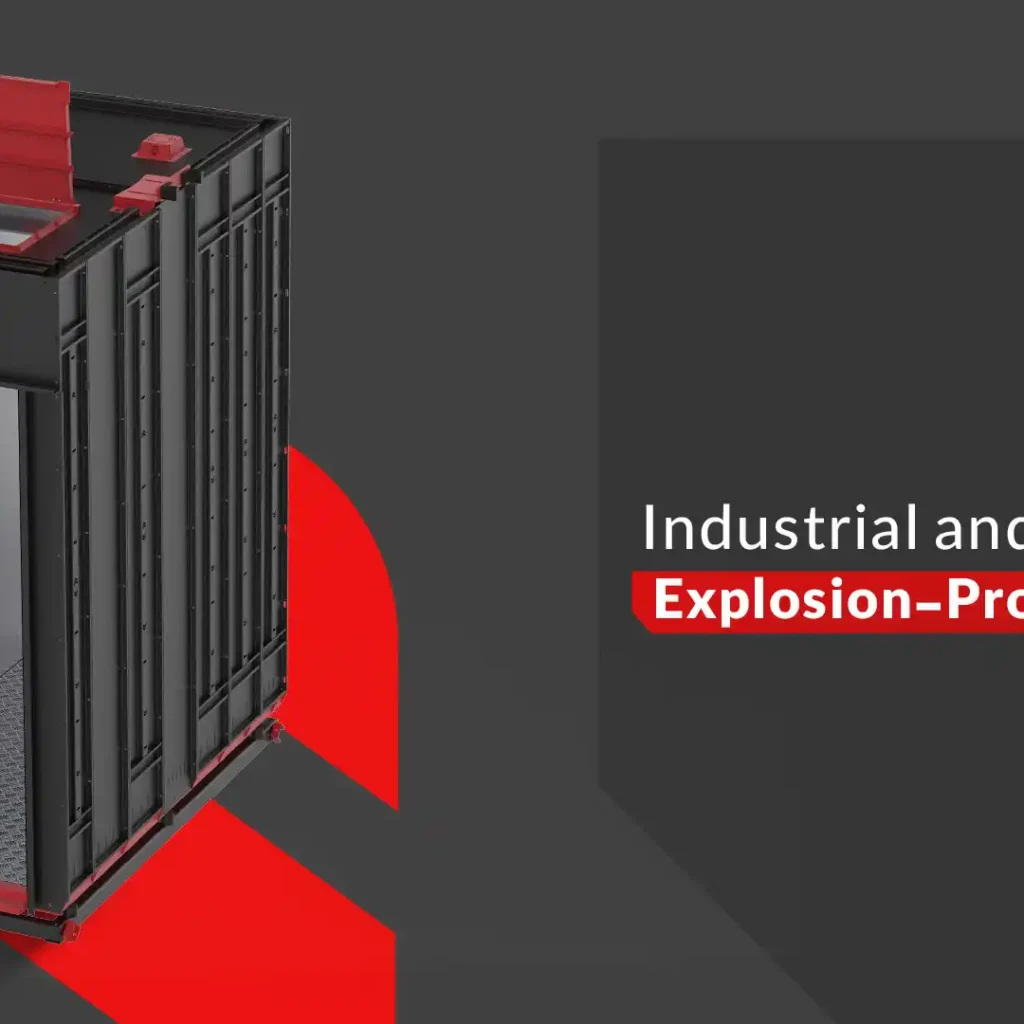
Industrial Elevator | آسانسور صنعتی

2024 August 11

Read time : 14 m

Share:

Industrial and Explosion-Proof Elevators

In advanced workshops and factories worldwide, especially in the oil, gas, petrochemical industries, cement factories, and mines, there is a significant need for industrial and workshop elevators with special features, including water resistance, dust resistance, and explosion-proof capabilities. Due to the complexities involved in the design and implementation of these projects, only a limited number of elevator companies can design, calculate, and implement industrial elevators, particularly when water and explosion-proof features are added to the project.

These types of elevators are used in factories and industrial units and are designed for specific industrial environments such as petrochemical industries, mines, cement factories, and silos. Due to the presence of flammable gases and the risk of explosions, special equipment and resilient infrastructure are required in these locations. These elevators must have special components and proper insulation to ensure safe and effective performance under harsh environmental conditions.

Applications and Features of Industrial Elevators

Industrial elevators are categorized based on their applications into several groups, including:

  1. Power Plants
  2. Petrochemical and Refinery Industries
  3. Dam Construction
  4. Various Manufacturing and Industrial Factories
  5. Mining Industries
  6. Aluminum, Copper, Steel, Zinc, and Other Industries
  7. Marine Industries

Each of these industries has specific requirements, and a comprehensive needs assessment is conducted for installing elevators in these environments. Often, elevator designs are customized for each application, followed by careful assembly, installation, and commissioning. This process is crucial due to the special conditions and high safety standards required in these industries.

Industrial Elevator | آسانسور صنعتی

Types of Technology in Industrial Elevator Construction

Industrial elevators are categorized into three main types based on the technology used:

  1. High IP: These elevators have a high protection rating, making them resistant to water, dust, and other environmental factors.
  2. EX: Designed for environments with explosion risks, these elevators adhere to special safety standards to ensure maximum security.
  3. Rack & Pinion: This technology operates on a rack and pinion system, making it suitable for industrial environments requiring high precision and handling heavy loads.

This list can also include other technologies that, due to their specific features and less common applications, fall under the “special elevators.”

IP54 Elevator

To better understand IP54 elevators, it’s important to first grasp the IP or Ingress Protection concept. The IP Rating, defined by the international standard IEC 60529, indicates the level of protection that electrical equipment has against dust, water, accidental contact, and the ingress of solid objects into electrical enclosures.

The environmental and situational conditions where the elevator is installed play a crucial role in its durability and performance. For instance, the amount of dust in the air is a significant factor, and it’s essential to know how to protect devices from environmental damage.

The importance of the protection rating is so high that contractors are required to strictly adhere to standard protective guidelines. Neglecting this issue in projects can lead to damage for the client and incur significant additional costs.

Industrial Elevator | آسانسور صنعتی

IP Rating in Elevators

The ingress protection (IP) rating, as defined by the international standard IEC 60529, is known as IP (International Protection). This rating indicates the level of protection a device or enclosure has against the intrusion of solid particles and liquids, such as dust and water. The IP rating is represented by a two-digit code, where higher numbers indicate greater protection. The first digit corresponds to protection against solid objects, while the second digit relates to protection against liquids, particularly water. The standard is displayed with the prefix “IP” followed by the two-digit number, where the first digit ranges from 0 to 6 and the second from 0 to 8.

In industrial units such as refineries, petrochemical complexes, oil platforms, and other high-risk areas, safety precautions are crucial due to the presence of flammable powders and gases. Even a small spark in these environments can lead to catastrophic accidents. To maintain safety in such environments, explosion-proof and dust-resistant elevators have been developed. The IP54 elevator is one such elevator, specifically designed for hazardous environments. These elevators are suitable for high-traffic areas, as well as spaces that are open, humid, or dusty. They are widely used in petrochemical industries, cement factories, and power plants.

An elevator is inherently a complex device with intricate components, and an IP54 elevator, which is also explosion-proof, requires specialized parts that are challenging to procure. One of the reasons for the difficulty in obtaining these parts is that all components must be explosion-proof.

Some of the specialized components for these elevators include:

  • Insulated control panel
  • Explosion-proof switches and sockets
  • Spark-proof lighting inside the cabin
  • Control panel inside the cabin
  • Three-phase power supply panel
  • Cabin ventilation fan
  • Control micro-switches and sensors
  • Machine room ventilation fan, explosion-proof safety gear (parachute)
  • Revision box
  • Special motor and doors with custom locks

Some of these components must be enclosed in sealed spaces, such as electric motors, hydraulic power units, control panels, switches, and all contactors.

Industrial Elevator | آسانسور صنعتی

EX Elevators

In specialized industrial environments such as refineries and petrochemical plants, high humidity and temperatures can increase the risk of explosions. As a result, a wide range of explosion-proof equipment, known as EX equipment, has been developed, including the explosion-proof elevator or EX elevator. These elevators come in various types and must be selected based on the specific environmental needs and intended functionality.

Ensuring adherence to standards and safety protocols in the installation and operation of EX elevators is crucial. The required equipment and components for these elevators include:

  • Antistatic cabin flooring
  • Control micro-switches and sensors
  • Explosion-proof switches and sockets
  • Three-phase power supply panel
  • Explosion-proof safety gear (parachute)
  • Spark-proof lighting inside the cabin
  • Control panel
  • Revision box
  • Cabin control buttons
  • Cabin ventilation fan
  • Machine room ventilation fan

EX elevators are used in high-risk industrial environments where the potential for explosion is significant. These environments include petrochemical industries, refineries, mining industries, and similar locations.

When installing and using EX elevators, the following points must be observed:

  • No sparks should be generated in explosion-proof elevators, as even a small spark can lead to an explosion.
  • All safety principles must be strictly adhered to.
  • The design and installation of EX elevators should be carried out using explosion-proof (EX) circuits.
  • All electronic components of the explosion-proof elevator must be EX-rated.
  • Electric motors, hydraulic system power units, control panels, switches, and contactors must be enclosed in sealed spaces to ensure complete safety.
Industrial Elevator | آسانسور صنعتی

What do you think about this article?

Share your opinion with us

MRL Elevators | استاندارد آسانسورهای MRL

Standard Conditions for Machine Room-Less Elevators (MRL)
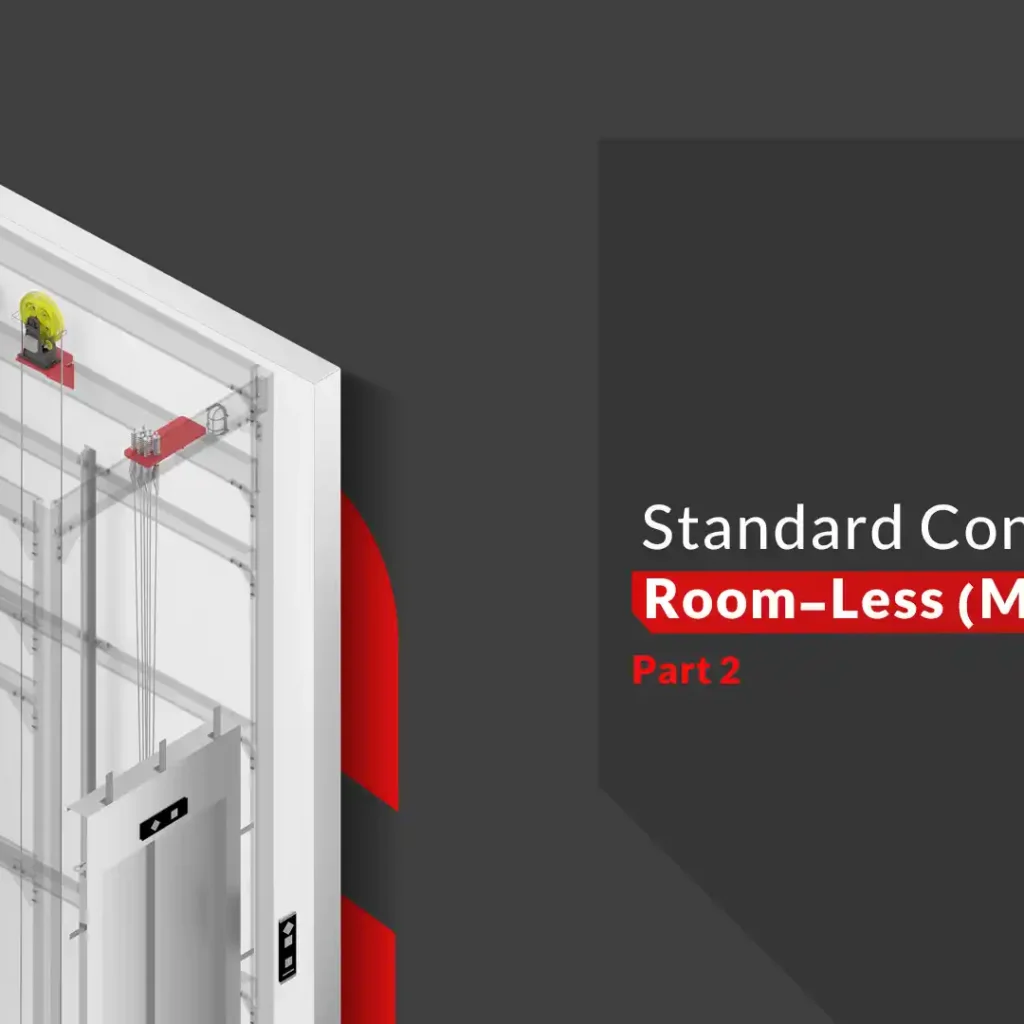
MRL Elevators | استاندارد آسانسورهای MRL

2024 Auugust 11

Read time : 15 m

Share:

Standard Conditions for Machine Room-Less (MRL) Elevators

Machine Room-Less (MRL) elevators have gained widespread use due to their numerous advantages, especially in new construction and renovation projects. This type of elevator is also suitable for public spaces such as subways, passenger terminals, and large buildings like commercial complexes with open spaces and panoramic views.

In MRL elevators, the placement of doors or hatches and the overhead space for the motor are of particular importance. According to building regulations, installing these elements should not obstruct minimum passageways. Additionally, the overhead space for the elevator motor must be at least 0.3 meters. If this clearance is insufficient, a protective cover for the motor must be used.

For maintenance and inspection of MRL elevators, five access points can be utilized:

  1. Hatches located outside the elevator shaft for accessing the machinery
  2. The roof of the machine room-less elevator car
  3. Hatches on the walls of the MRL elevator cabin
  4. The pit floor of machine room-less elevators
  5. The platform of MRL elevators

Conducting Tests from Outside the Elevator Shaft

In addition to the capability for inspection and maintenance of machine room-less (MRL) elevators from five different positions, it must also be possible to perform dynamic tests, such as buffer tests, overspeed protective device tests during ascent, traction tests, safety gear tests, brake tests, and emergency rescue operations, from outside the elevator shaft.

To access machinery inside the shaft from an external workspace, this area must meet the following conditions:

  • Sufficient Dimensions: The space should be large enough to perform necessary tasks through the hatch or door.
  • Minimum Working Space: The size of the working space should be as small as possible to prevent falls into the shaft.
  • Lockable Access: The workspace must have lockable access, which can be locked and secured without a key.
  • Safety Electric Device: The workspace should have a safety electric device to control the locked state.
  • Non-Inward Opening: The workspace should not open inward towards the shaft.
  • Sealed and Electrically Resistant: The workspace must be free of any openings and have electrical resistance by elevator landing door standards.
  • Fire Protection Compliance: The area should comply with building fire protection regulations.
MRL Elevators | استاندارد آسانسورهای MRL

Conducting Maintenance or Inspection from the Roof of a Machine Room-Less (MRL) Elevator Car

When performing tasks such as inspecting machinery or maintenance from the roof or inside the elevator cabin, the following considerations should be observed:

  • Use of Mechanical Devices: To prevent dangerous movements of the cabin, mechanical devices such as park plates or fix plates should be utilized. If these devices are not operational, safety electrical devices or micro switches should be employed to prevent unintended cabin movement.
  • Operational Safety: Safety measures must be in place to ensure the safe execution of maintenance operations and a secure exit from the work area.
  • Inspection Through Cabin Wall Hatches: Inspection or maintenance should be possible through the hatches in the cab walls. If these hatches are present, they must be designed to allow access to the inside of the shaft without requiring entry into the shaft, as mentioned in previous paragraphs.

Conditions Required for Cabin Movement with Open Hatch:

  • Access to the Inspection Box: The inspection box should be located near the inspection hatch for easy access.
  • Deactivation of Hatch Micro Switch: The hatch micro switch must be deactivated using the inspection switch located inside the cab wall.
  • Location of the Inspection Box: The inspection box should be installed behind the inspection door or hatch, ensuring that only the responsible person inside the cab has access to it.

Performing Maintenance or Inspection of Machine Room-Less (MRL) Elevators from the Pit

When carrying out maintenance or inspection of machinery from the elevator pit, specific conditions must be met:

  • Mechanical Stopping Device: The selected mechanical device used to stop the cab must be capable of bearing the elevator’s rated capacity, and its stopping speed should not exceed the elevator’s rated speed. Additionally, when the cab is stopped, this device must ensure a minimum clearance of 2 meters between the pit floor and the lowest part of the cab. The mechanical device should not induce acceleration greater than that caused by the buffer.
  • Returning the Elevator to Normal Operation: To restore the elevator to normal functionality, an electrical device capable of resetting the system must be used. This action should be performed from outside the shaft and only by authorized personnel. A safe location for this device is inside a locked panel. The mechanical stopping device must securely hold the cab in place, and its operation can be either manual or automatic.
  • Considerations for Elevator Specifications: The dimensions, capacity, and type of the elevator vary depending on the type and purpose of the building. Most multi-story buildings are equipped with elevators, which are considered a significant asset to these structures.
MRL Elevators | استاندارد آسانسورهای MRL

What do you think about this article?

Share your opinion with us