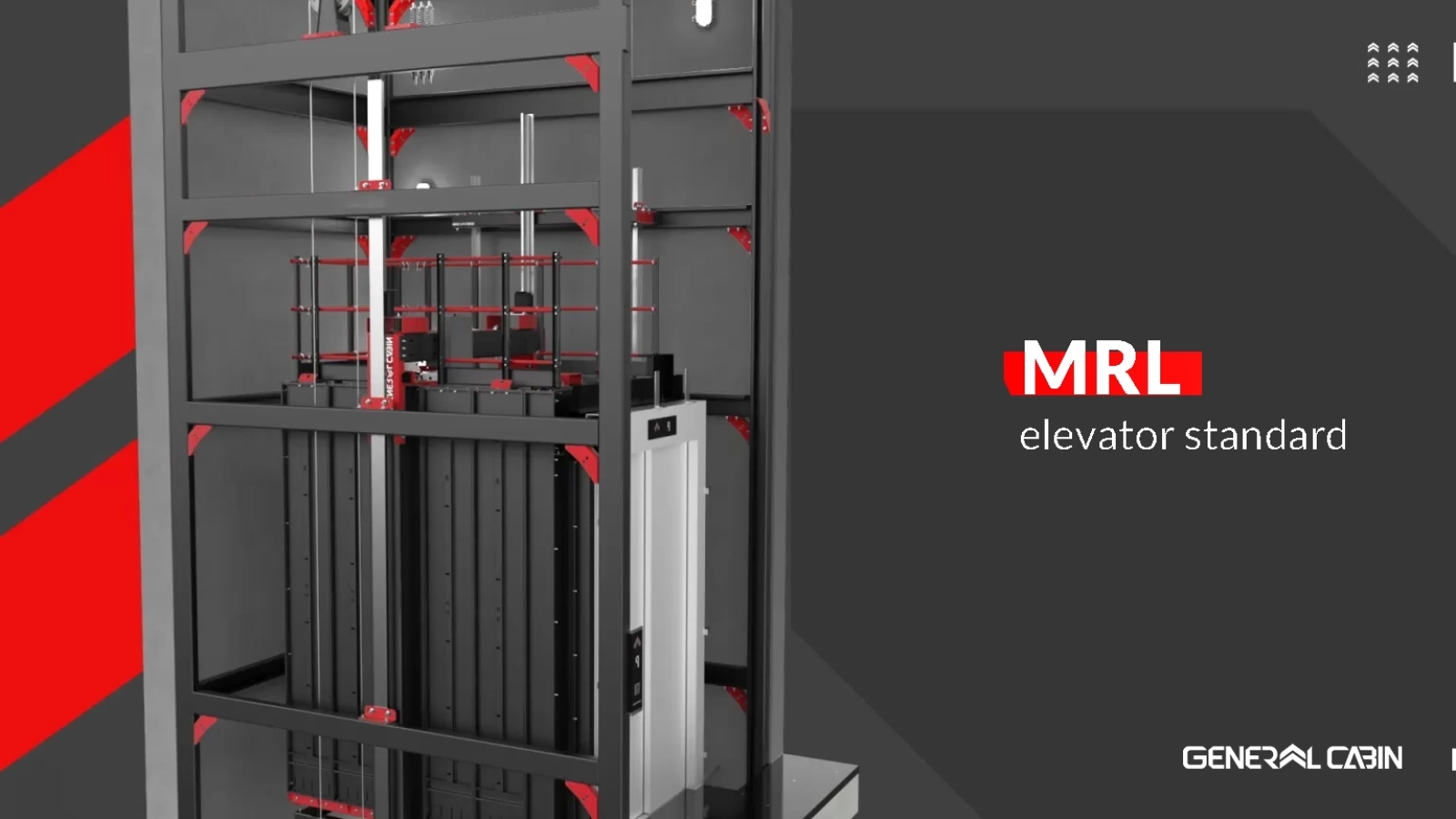

MRL Elevator Standard

The standard for MRL elevators

2024 January 20

Read time : 10 m

Share:

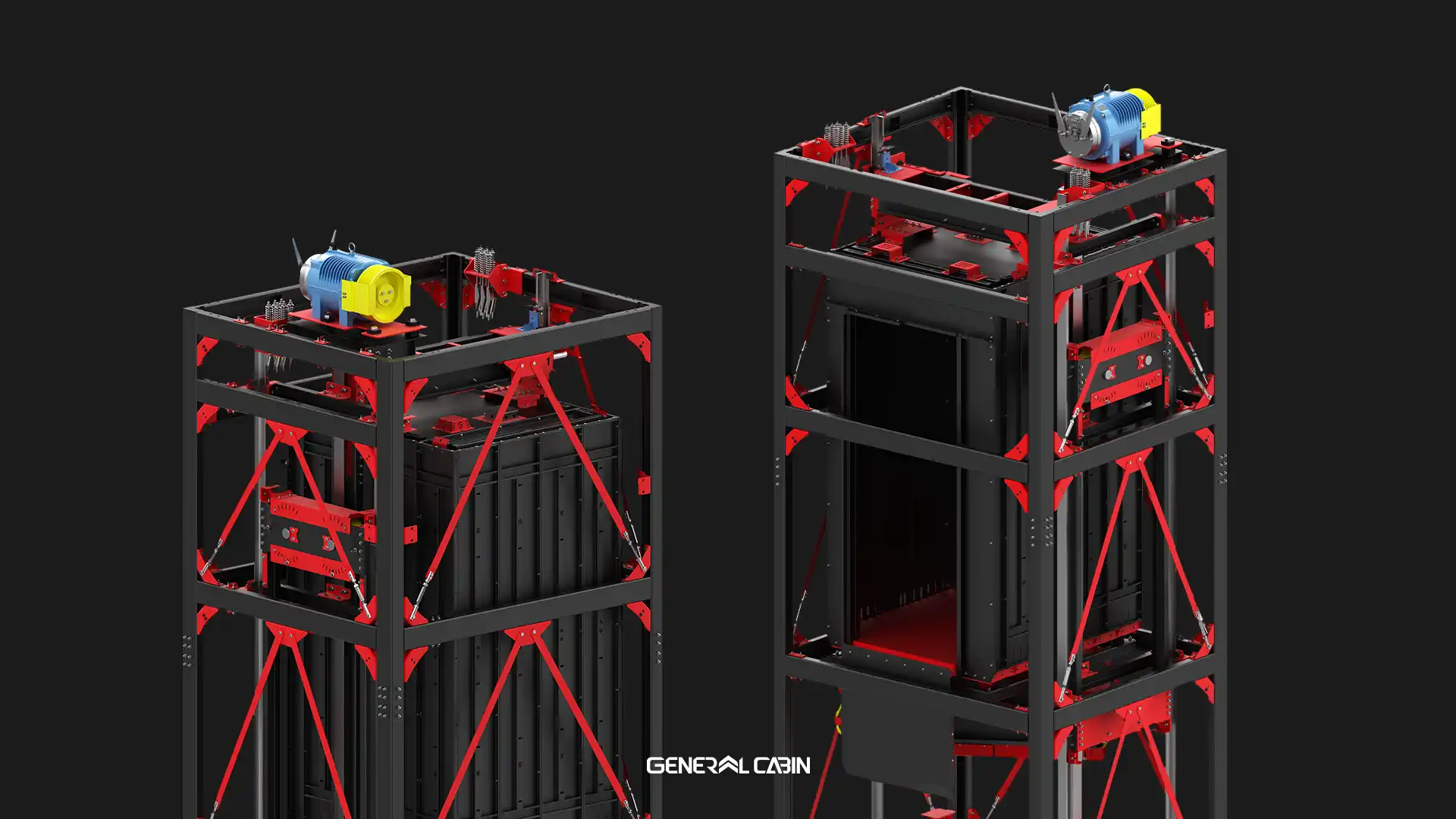
The standard for MRL elevators or those without a machine room is one of the issues many elevator companies consistently have trouble calculating, and its significance becomes apparent when there is also a space limitation in the overhead part.

Overhead Calculation

Overhead, also known as the clearance at the top, refers to the distance from the floor of the highest stop to the underside of the shaft’s ceiling. To calculate this measurement, we need an important prerequisite:

Initially, there must be an air gap between the counterweight frame and the buffer, followed by buffer compression, which if our buffer is polyurethane, is compressed to 90% of the buffer’s height, and if our buffer is hydraulic, it compresses to the stroke noted on its plate.

What is Shadow Casting in Elevators?

It means that if we shine a light from above onto any component inside the shaft, its shadow must not fall on the cabin. In this instructional video, the wire rope sockets on the right are colliding with the cabin, hence their shadow is cast onto our cabin. The shadow cast cannot be more than 15 cm, because at the shadowed area, we can separate it from our cabin with a guardrail on the cabin, and the guardrail cannot protrude more than 15 cm over the cabin. When our cabin is positioned on the level of the top floor, we must account for the additional length of its rail.

Our cabin rail casts a shadow with our motor chassis, so our motor chassis must be positioned higher than our rail. In this section, we calculate the distance from the cabin floor to the top of the shoe, which plus our compression plus the air gap, then adding 0.1 + 0.035 v^2, equals the required rail length for our project.

Therefore, we must place the motor chassis at a distance above this measurement from the rail. After the motor is chassis-mounted, we bring up the cabin until our counterweight frame is positioned on the compressed buffer. We then must check the four conditions at the top of the shaft:

  1. Additional rail which after the cabin shoe up to the end of our rail must be spaced at 0.1 + 0.035 v^2.
  2. Standing place. Anywhere on the cabin that is 12 square centimeters with the smallest edge being 25 centimeters up to the ceiling overhead must be spaced at 1m + 0.035v^2.
  3. Equipment. Our tallest equipment is usually the railing, which must be spaced at 0.3 + 0.035v^2 from the shaft ceiling. Note in this part is that since our wire rope socket casts a shadow on our cabin, the ceiling overhead for our cabin right now is considered the wire rope socket plate, so 0.3 + 0.035v^2 should be measured here.
  4. Cube condition. We must have space for a refuge cube measuring 50 by 60 by 80 centimeters on one of its sides on the cabin.

After we have reviewed the four conditions above, we need to determine where our service and maintenance area is on the cabin. This space must be 50 by 60 cm on top of the cabin. This space should be on the side of the motor brake. After we have identified this, we now need to review the MRL (Machine Room-Less) conditions together.

The first point to consider is where we need to activate our parking plate. The parking plate is activated in a space where there is a minimum distance of 2 meters from our service and maintenance area to the underside of the ceiling.


The next point is that when standing in this location, we must have full access to the motor brake, and also nothing in our path should be less than 1820 cm in height to reach this location.

In this section, we want to examine the methods of exit together. We have two types of exits:

  1. Exit through the top floor door: For this purpose, we activate our parking plate where there is at least 60 cm of space between the cabin and the top floor door. One of the greatest advantages of this method is that it requires less overhead space. Considering that the cabin rail now casts a shadow with our motor chassis, and also our cabin with the wire rope end socket, we cannot use this method.
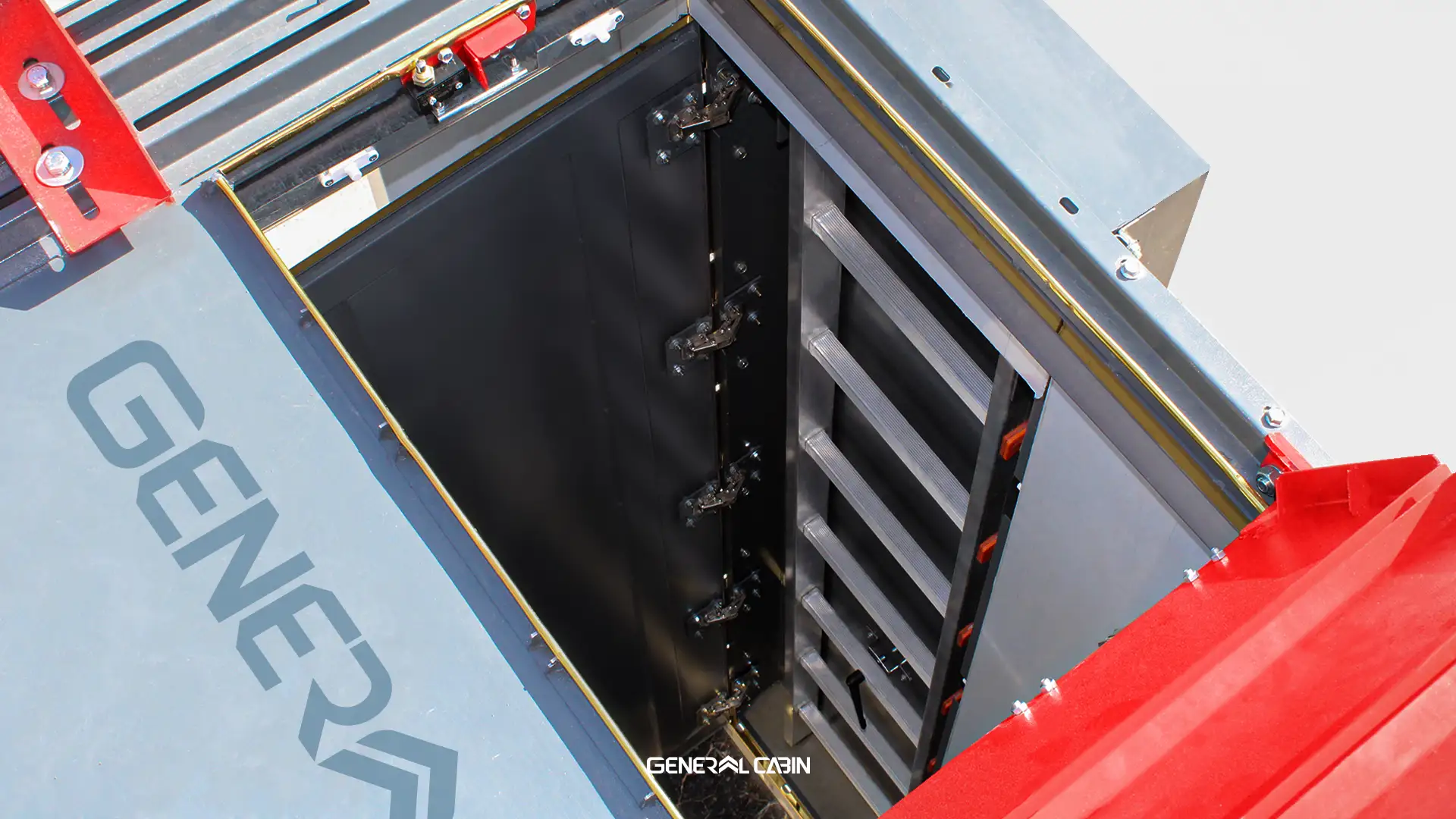
  2. Exit through the hatch: If building conditions allow us to have a hatch above the back of the cabin, it is one of the best methods of exit. This hatch must be at least 60 by 60 cm. It should have a door without any openings, a lock that can easily be opened from the inside, and a key from the outside.

It must also be equipped with a safety switch. When we activate the parking plate, we must not have a height greater than 50 cm from our standing location to the hatch; if we do, we must provide a ladder. Moreover, there should be no more than 30 cm of space from the cabin to the hatch.

Now that we have explained the hatch, we must be able to move to this location. The best scenario is that our entire route has a minimum width of 50 cm.

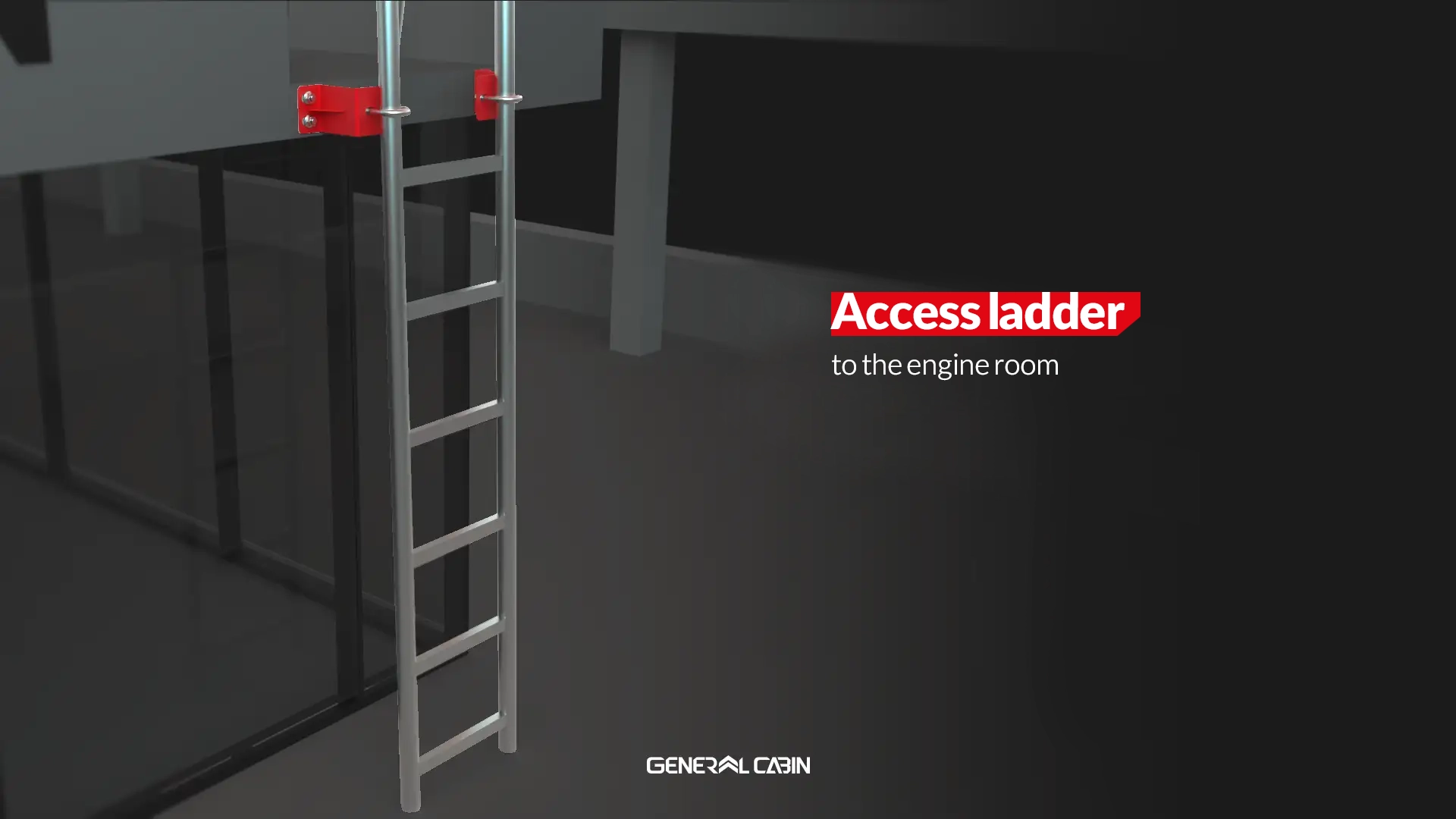
It is also preferable to provide this route through a staircase. If it is not possible to install a staircase, we must have a ladder.

This ladder cannot be used for heights above 4 meters, and it must be installed in such a way that it cannot be removed. When the height of the ladder exceeds 1.5 meters, it must have an angle of between 65 to 75 degrees.

The useful width of the ladder must be at least 35 cm and the depth of each step must not be less than 25 mm. If a vertical ladder is used, there must be a minimum distance of 15 cm from the wall, and each step must be able to bear a load of 1500 N. The ladder must be at least 1.5 meters away from the nearest edge.

What do you think about this article?

Share your opinion with us

What Is The Elevator Pit

?What is an Elevator Pit

2024 January 18

Read time : 10 m

Share:

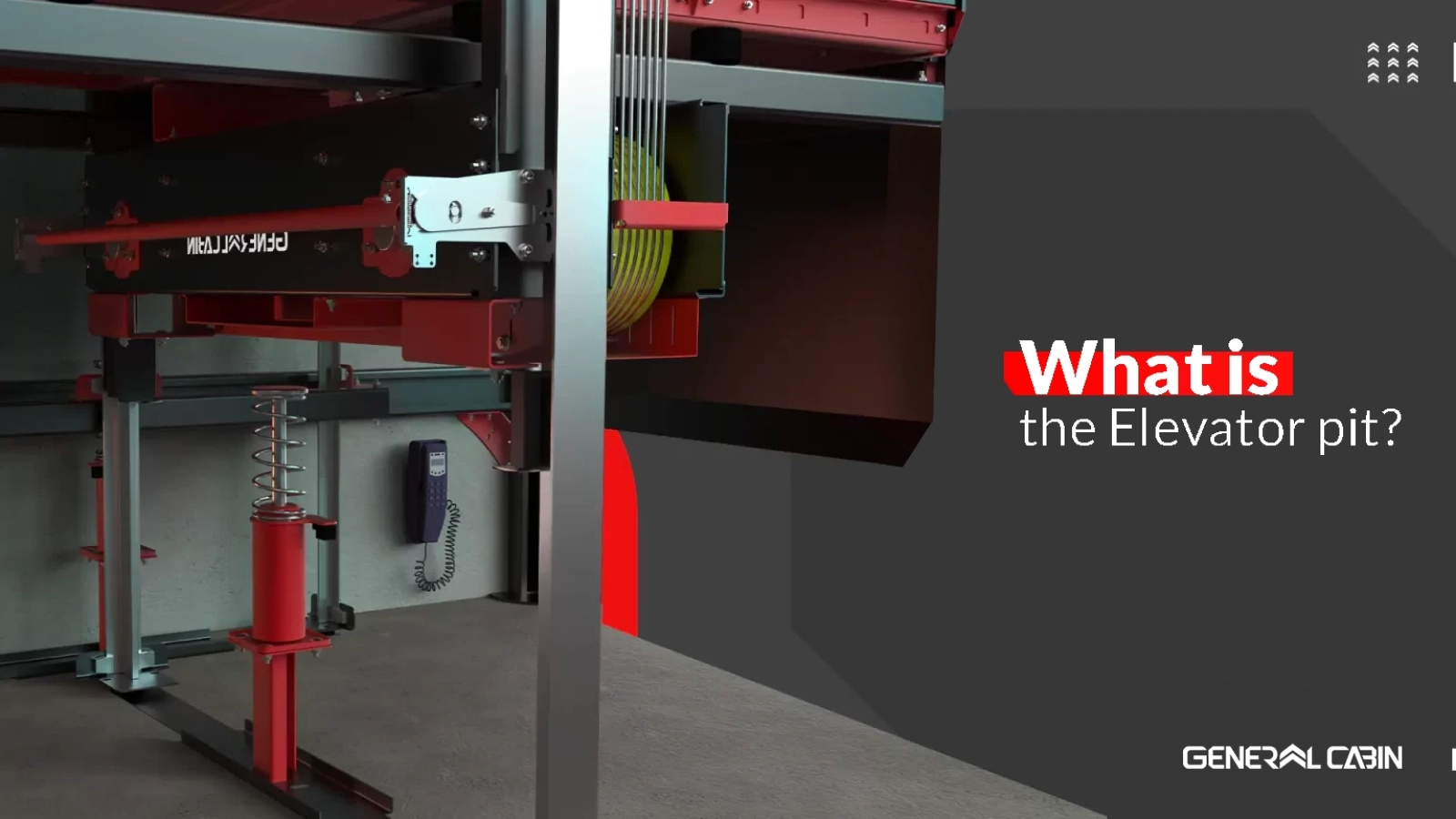
What is an Elevator Pit?

Considering standard pit requirements and undertaking a series of prerequisites before the implementation of elevator installation and commissioning projects prevents the need for repeating stages and incurs additional time and cost. One of the crucial aspects to consider is the elevator pit.

Difference Between Shaft and Elevator Pit

Before delving into the definition of an elevator pit, it’s essential to understand the elevator shaft or pit. Simply put, the shaft or pit is a vertical tunnel from the lowest point (i.e., the building’s foundation) to the topmost floor, which includes the machine room.

In other words, the elevator pit is a space where the elevator car and all its components move. Typically, the walls of the elevator pit are plastered with cement and have no gaps or cracks. Additionally, walls with plaster covering must be painted.
According to the definition set by the National Building Regulations of Iran, in Chapter Fifteen, the distance from the lowest landing to the end of the shaft is referred to as “pit.” This space is created to provide a suitable area for technicians to work and install certain elevator equipment and components such as buffers and safeties.

Important points such as the proper reinforcement of the pit, determining the dimensions of the elevator shaft, and the design and execution of the pit should be carefully considered in your projects.

Apart from the rail bases, buffers, and drainage facilities, this area must be smooth and level. It should also be resistant to water penetration. If the pit is deeper than 2.5 meters, and the building design permits, it needs an access door for entry and exit. Alternatively, if no door is present, a ladder can be used as an alternative.

Additionally, the pit floor should have a mushroom stop, an illumination switch, and a waterproof outlet. The condition for the mushroom stop is that it must be accessible not only from the pit floor but also from the first-floor door.

The pit also needs to have a telephone. The standard specifies that if there is a risk of people working inside the pit and there are no provisions for their rescue through the car or the pit, signaling devices must be installed in areas where this danger is present.

The car must be placed on a compressed buffer, where the discussion about air gap and compression comes into play. If the buffer is made of polyurethane, it should be compressed to 90% of its height, and if it is hydraulic, it should be compressed to the value indicated on the compacted plate.

When the car is placed on fully compressed safeties, the counterweight guide shoe should have an additional rail length of 0.1m + 0.035v2 to allow for guided movement and provide balanced weight to at least the specified minimum value of 0.1m + 0.035v2.

A set of conditions must be established in the pit together.

The first condition is that there must be a minimum adequate space in the pit to accommodate an imaginary cube with dimensions of 0.5m × 0.6m × 1.0m on one of its sides.

The second part states that the distance from the lowest part of the car to the pit floor must be at least 0.5m. In high-capacity cars, it is possible to have a large yoke, but in low-capacity cars, the lowest tray is considered.

If both conditions are met, this distance can be reduced by up to 10cm. The first condition for this reduction is that the distance from the tray under the car doors or vertical sliding doors to the opposing wall should be less than 15cm. The second condition is that the guide shoes and safety brakes should not have a distance of more than 15cm from the car rails.

What do you think about this article?

Share your opinion with us

Elevator guide shoes

What is a Guide shoe?

Elevator guide shoes

2023 October 8

Read time : 10 m

Share:

What is a Guide shoe?

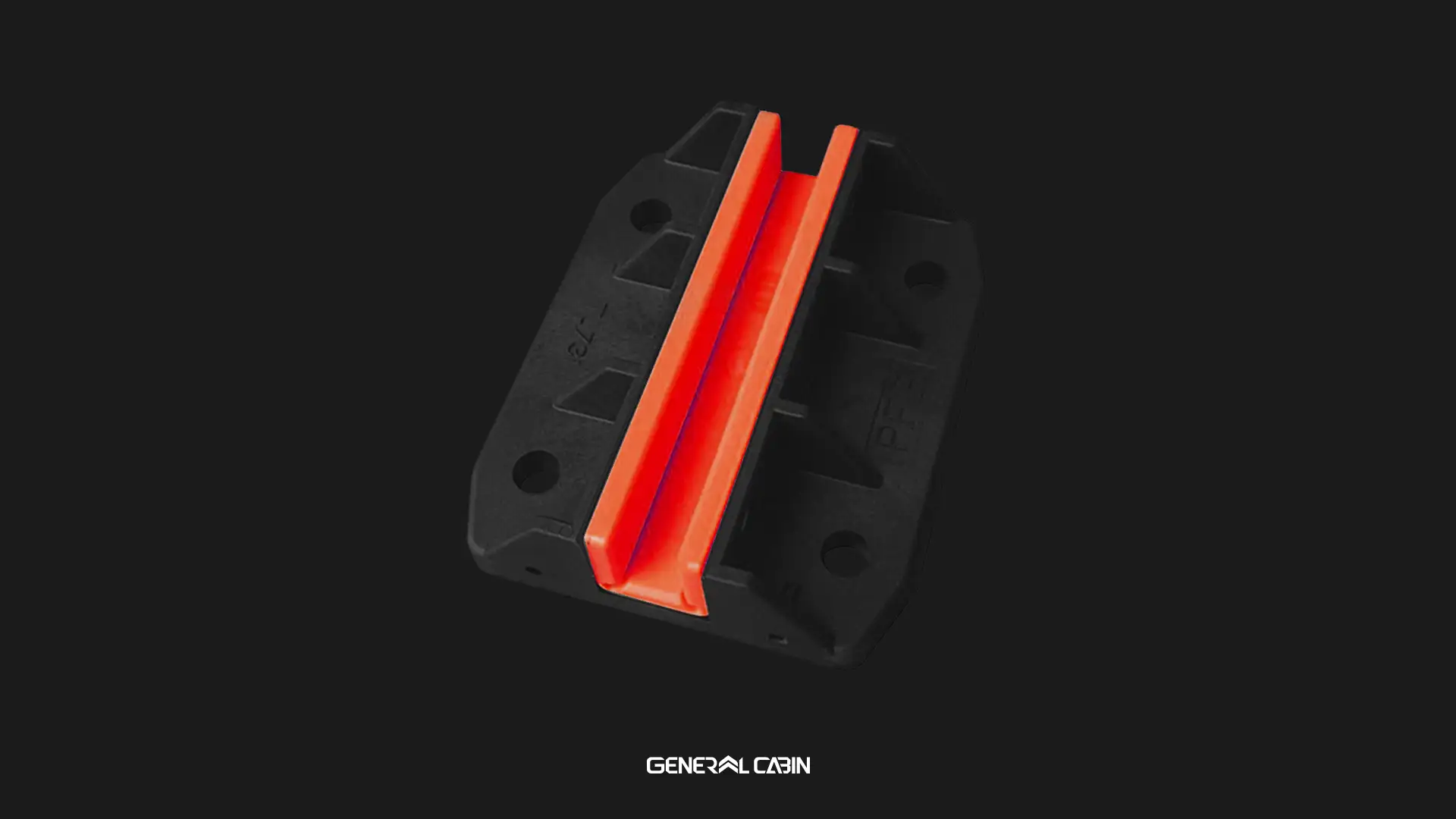
One of the main parts of the elevator cabin is the shoe, which has a good effect on the smooth movement of the elevator cabin and the counterweight of the elevator.

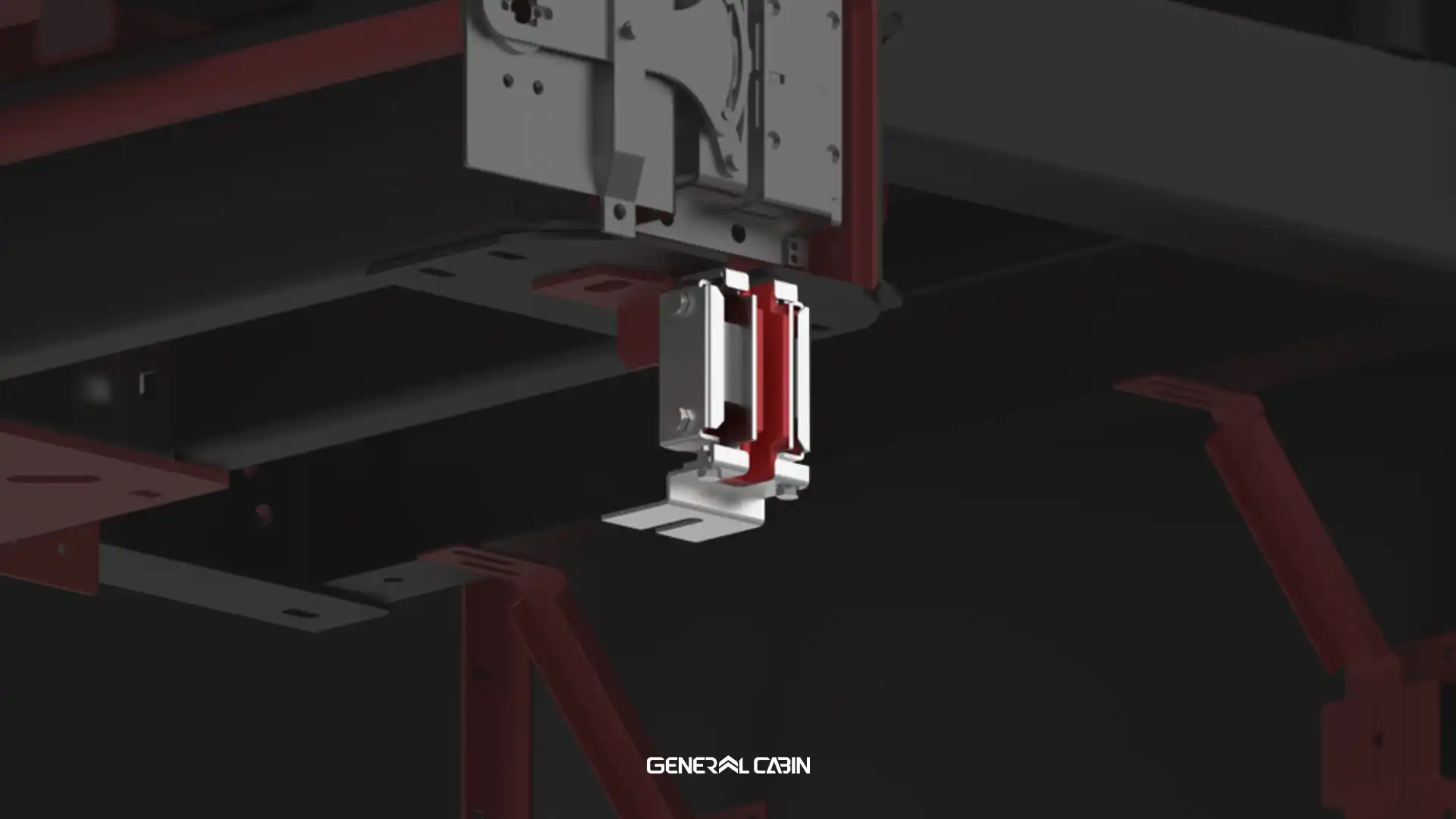
The shoes are installed at the bottom and top of the counterweight and the cabin, and their main task is to guide the counterweight and the cabin along the elevator guide rail. Shoes are produced in different types and materials, prices, and qualities.

The Use of Elevator Guide Shoes

Contrary to their small appearance, elevator guide shoes serve various purposes within the elevator. They are utilized in all elevators, including traction, hydraulic, and even magnetic ones. As mentioned, the primary role of guide shoes is to aid smooth movement, reduce the sliding of the elevator car, and maintain the balanced weight along the elevator guide rails. These factors collectively contribute to enhancing the quality of elevator movement.

Vibrations and tremors commonly occur as the elevator car passes the connecting point of the guide rails, but the guide shoes neutralize these vibrations, providing uniformity and smoothness in the movement while ensuring the balanced weight and cabin are well-supported.

Types of Elevator Guide Shoes

In general, guide shoes fall into three categories:

– Sliding Guide Shoes: These are the most common type of guide shoes and include various types of inserts such as rubber, and polyurethane (also known as gel). Sliding guide shoes, due to their full contact with the rail and absence of grooves, tend to transfer surface irregularities and vibrations from the rail connection to the elevator car. However, certain types of guide shoes, like Hitachi guide shoes, absorb a considerable amount of impact resulting from irregularities.

The maximum usable speed for these guide shoes is 2.5 meters per second.

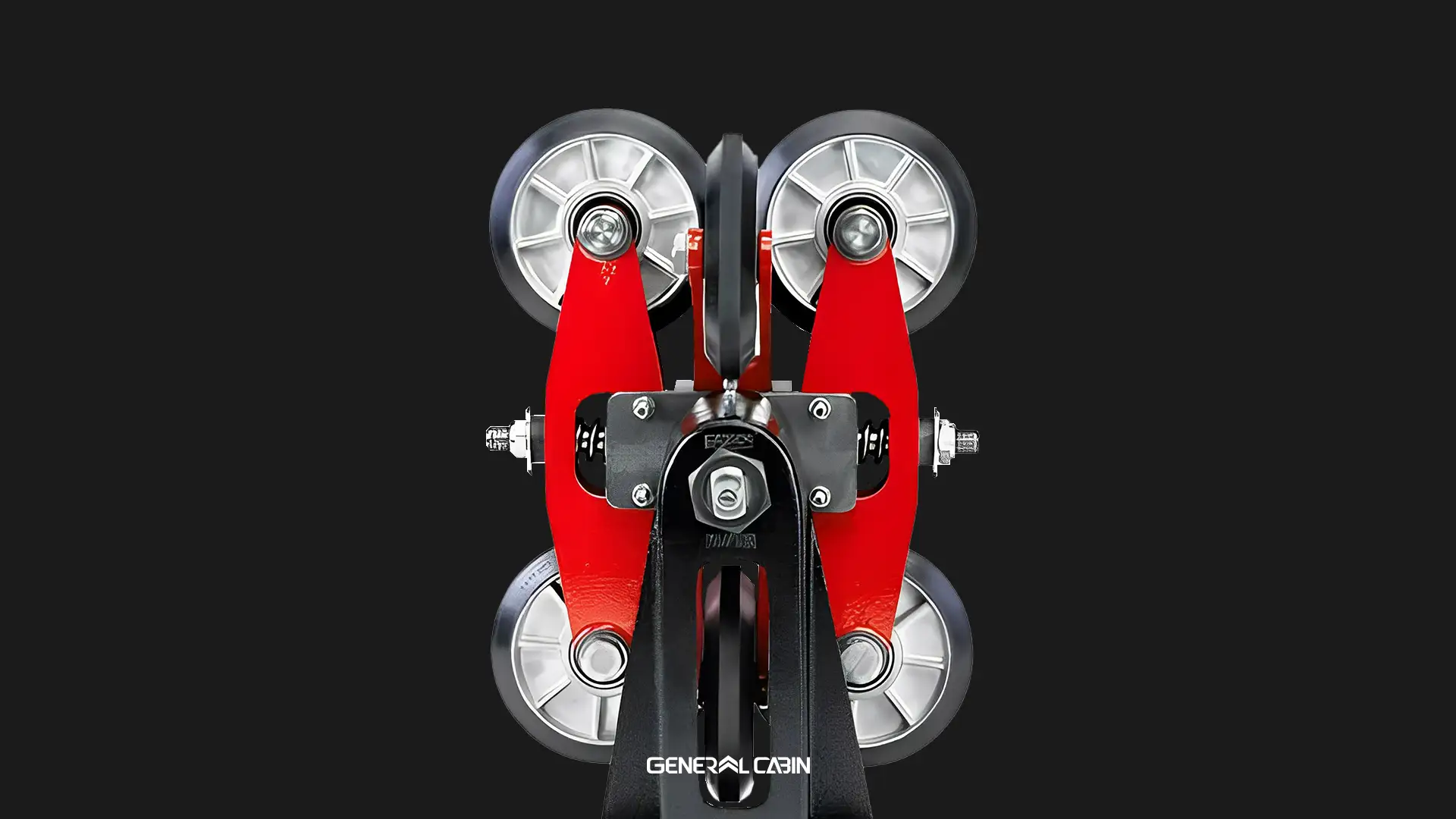
– Roller Guide Shoes: These shoes are positioned with three rollers on three faceted rail surfaces. The combination of these rollers and their base forms the roller guide shoe, which does not slide. Each roller has a spring that absorbs and prevents a significant portion of irregular impacts from being transferred to the elevator car. The performance of roller guide shoes is significantly influenced by the materials used for the bearings and polyurethane.

– Fixed Guide Shoes


Each of these guide shoes has its specific advantages and disadvantages, and it’s challenging to determine which is the best. However, sliding guide shoes, especially those with rubber inserts, are generally more popular.

Elevator Guide Shoe Inserts

The part of the elevator guide shoe that adheres to the guide rail and moves over it, is the guide shoe insert. It is made of various materials including polyurethane, polyamide, Teflon, and gel.

The dimensions of the insert vary in proportion to the rail. Each type of rail (e.g., T9, T16, etc.) has its specific guide shoe insert, and based on how it sits on the rail and the pressure exerted on it due to the load capacity of the elevator, a suitable insert with appropriate dimensions is used, ranging from stronger to weaker.

کفشک آسانسور

Guide Shoe Material

The body of the guide shoe insert can be made from various materials. It may be produced from steel sheets, cast iron, or die-cast, the majority of roller guide shoes are die-cast.

The material of the guide shoe body and insert are not necessarily the same and can be manufactured from entirely different materials.

Number of Guide Shoes

In a standard elevator, both the car and the counterweight are equipped with guide shoes. In normal circumstances, 90% of elevators use four guide shoes for the four directions of the elevator car and four guide shoes for the counterweight.

کفشک آسانسور

Installation and Maintenance of Elevator Guide Shoes

Elevator guide shoes need to be inspected over time and repaired if necessary. Roller guide shoes do not require continuous monthly oiling, while sliding guide shoes, due to their plastic inserts, need monthly oiling. Elevator guide shoes are equipped with springs that need to be properly adjusted during installation. The spring should not be overly tight or too loose. If the spring is too tight, it may exert pressure on the elevator motor and cause it to malfunction. On the other hand, if the spring is too loose, it can transfer vibrations and sliding movements from the guide rails to the elevator car. Failure to promptly address worn-out inserts can lead to elevator vibrations and misalignment of the elevator doors.

In addition to adjusting the springs, the distance between the insert and the main body of the guide shoe also needs to be adjusted in sliding guide shoes. Therefore, adjusting the springs is considered a part of elevator service and maintenance. In general, elevators need to be serviced and repaired at specific intervals. If the guide shoes are regularly oiled and serviced, their useful life is also extended. Additionally, the guide shoe inserts should be replaced every 8 months.

What do you think about this article?

Share your opinion with us

Elevator Cabin Ceiling

Elevator Cabin Ceiling

Elevator Cabin Ceiling

2024 January 16

Read time : 10 m

Share:

Elevator Cabin Ceiling

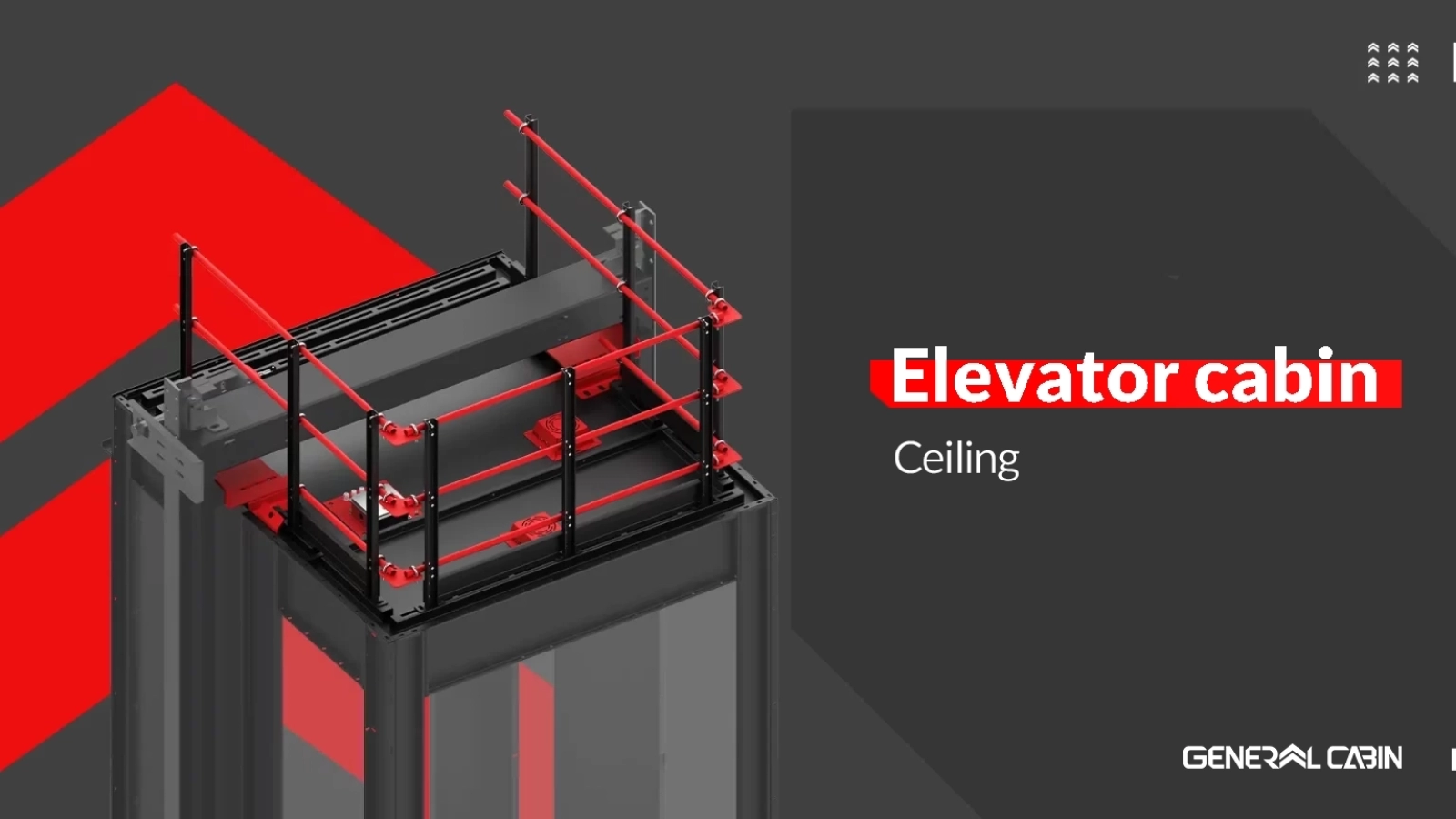
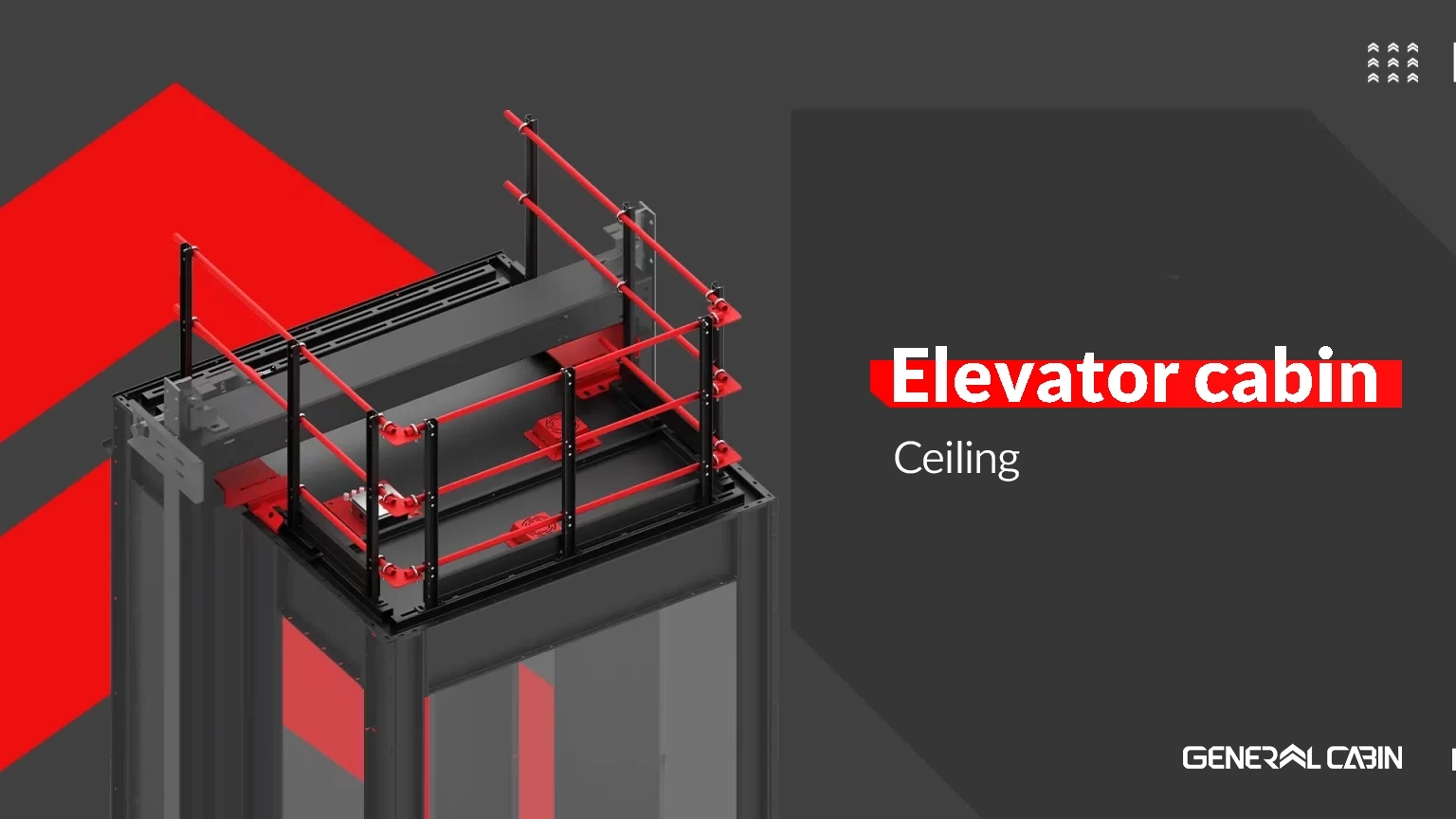
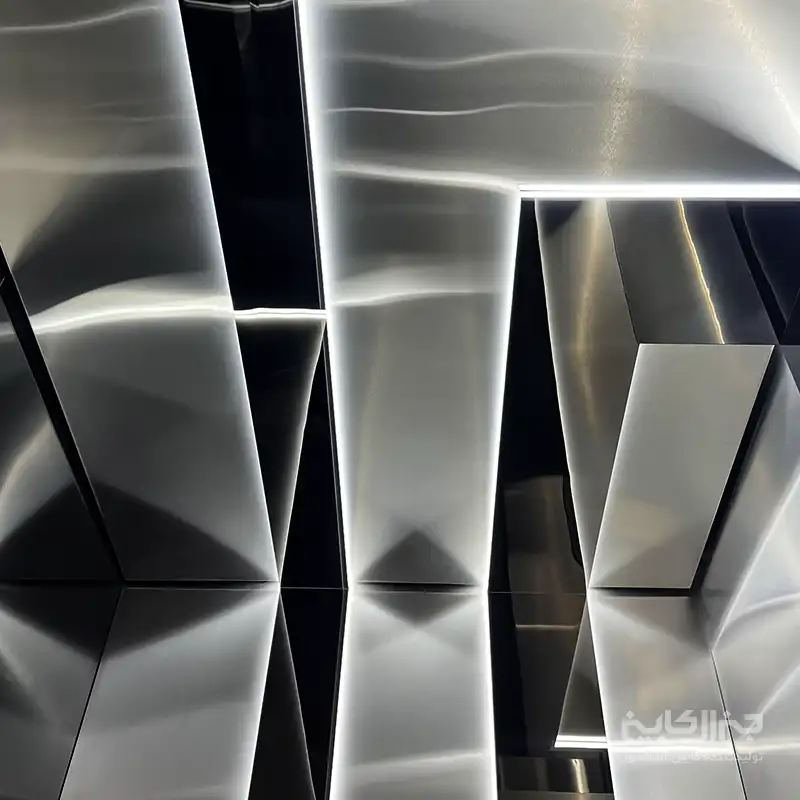
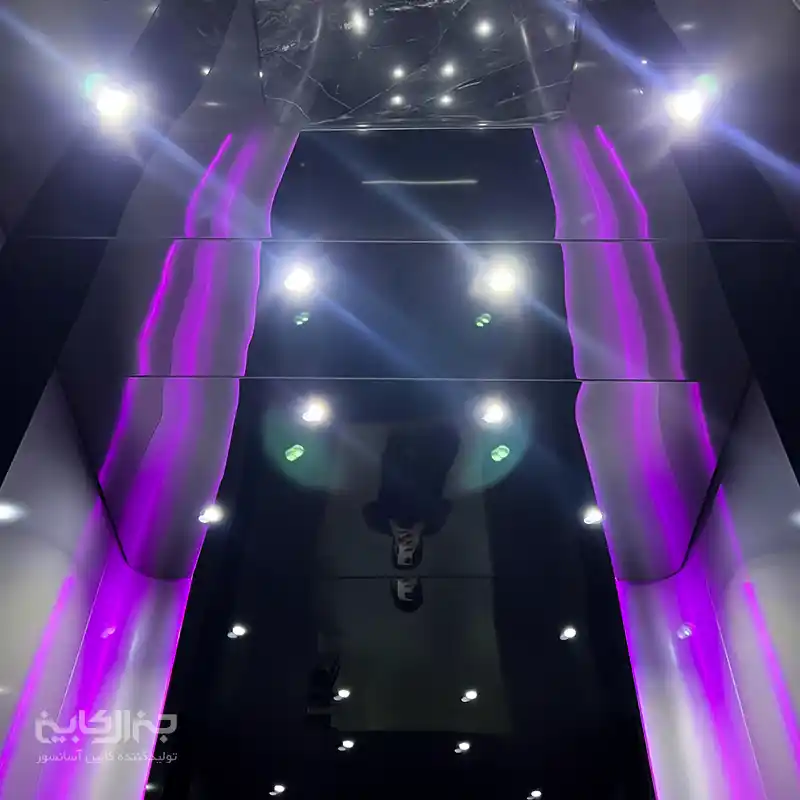
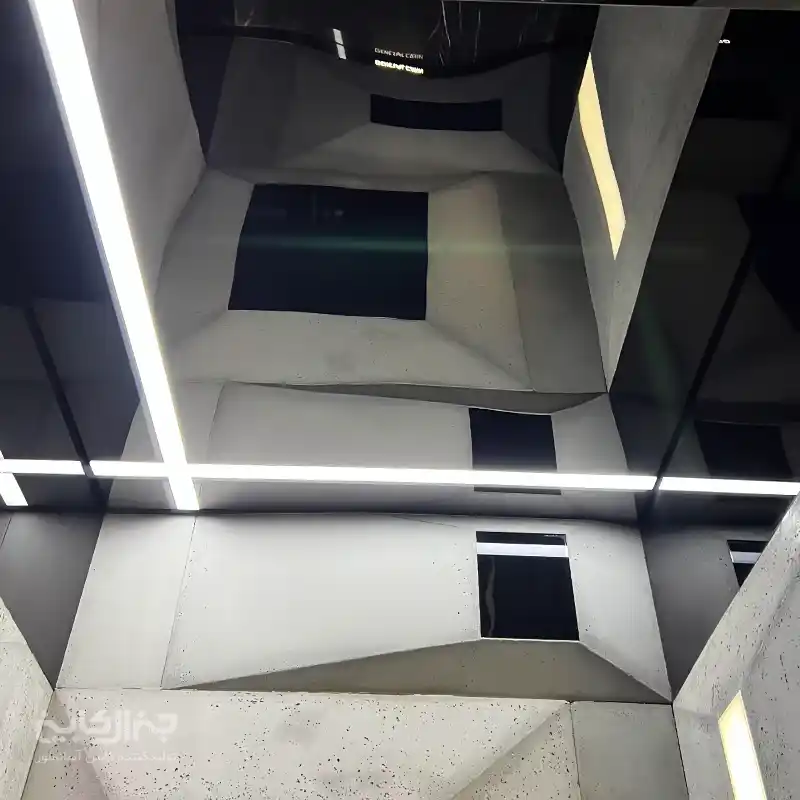
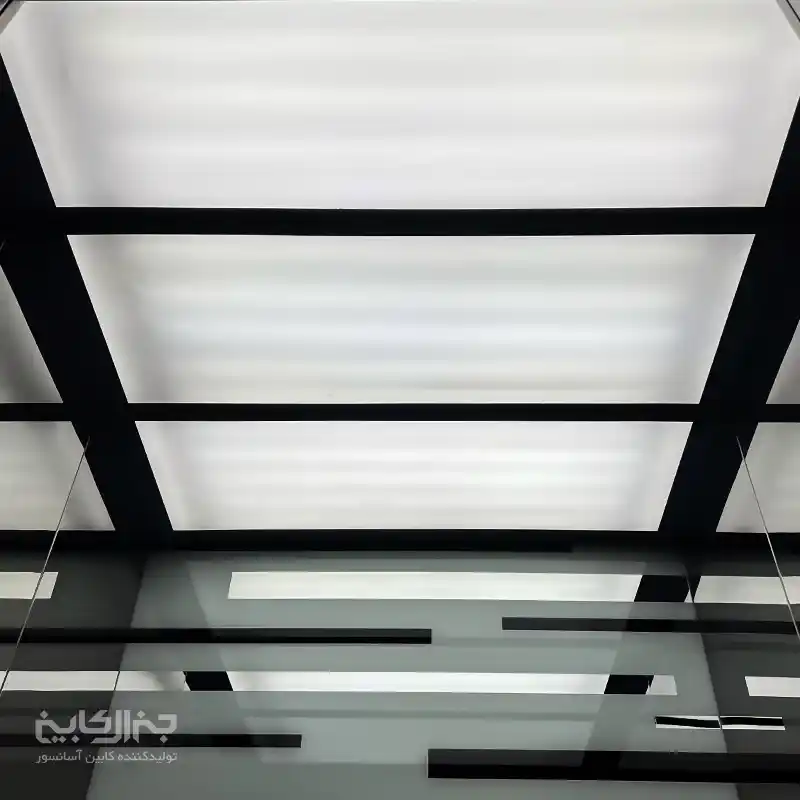
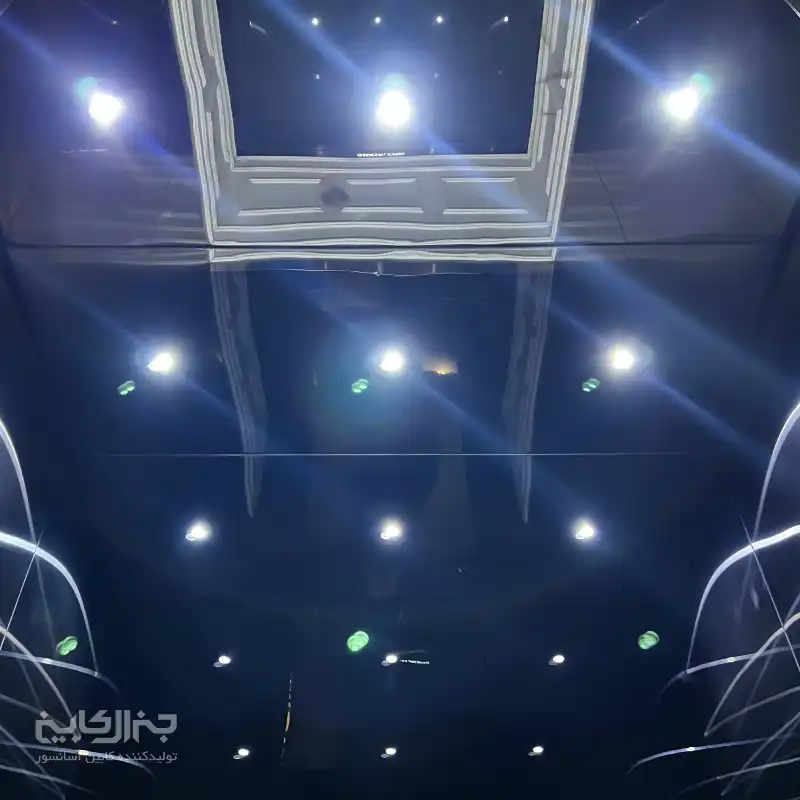
The elevator cabin ceiling consists of two parts: the main ceiling, which plays a crucial role in the elevator’s safety, and the suspended ceiling, primarily for aesthetics and decoration and provides the main cabin lighting and illumination.

When choosing an elevator cabin, it is essential to consider that the ceiling aligns well with the architectural style of the cabin and the building.

The suspended ceiling of the Elevator Cabin

The suspended ceiling is essentially the second layer of the cabin’s ceiling, primarily intended for the beauty and lighting of the cabin. This part of the cabin significantly impacts the beauty and the ambiance experienced by individuals inside the elevator cabin. Imagine being in an elevator with an unsuitable ceiling, made of low-quality material, and insufficient lighting. How would that make you feel? Typically, in such a situation, people may feel insecurity, stress, and lack of confidence in the other components of the building and the materials used. Conversely, if the materials used in the ceiling and other panels of the cabin are of high quality and sufficient lighting is provided, it conveys a sense of security, tranquility, and the value of the building to the individual. The suspended ceiling is connected to the main cabin ceiling by sturdy screws. The decorations in this section can include various types of lighting and intricate designs. Elevator cabin ceilings are designed in styles such as classic, modern, neoclassical, etc., tailored to the architectural style and the usage of the elevator cabin and the building, allowing for personalization.

سقف کابین آسانسور

Lighting

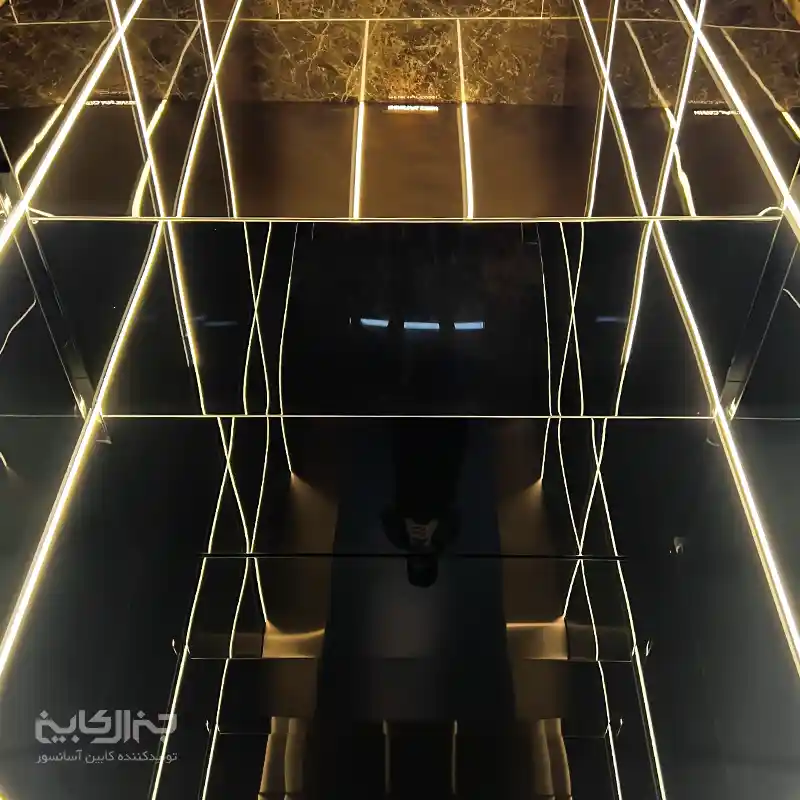
The elevator cabin ceiling serves as the primary source of illumination for the cabin. Each elevator cabin has its unique lighting, tailored to its design style and wall decorations. Various types of halogen, linear, and light profile lights can be used in the cabin’s ceiling. Light profiles come in dimensions and thicknesses ranging from 18 mm to 30 and 50 mm. For some ceilings, such as the G11-100 cabin ceiling, lightbox profiles are used. In some cabins, neon lights are used behind the laser-cut part of the ceiling to give a special appearance to the cabin.

Materials Used

In the main ceiling of General Cabin elevators, galvanized steel sheets with thicknesses of 2-3 millimeters are utilized, which are considered to have high standards and are coated with electrostatic oven-baked colors that are completely rust and scratch-resistant.

Welding is not used in either of the ceilings, and all parts are connected with screws and bolts for easy assembly, disassembly, and installation, providing the capability for easier repairs and replacements of the ceiling or the integrated lights. Typically, iron or steel is used in the suspended ceiling of elevators. Mirror finish steels are among the most popular materials used in the ceiling due to their reflective properties, making the elevator cabin appear larger and more aesthetically pleasing. In addition to steel and iron, one of the innovations and creative features used by General Cabin designers is using laminated tempered glass in the ceiling for the first time. The decorations of all elevator cabin panels, including the floor and ceiling, comprise laminated tempered glass and the reflection of RGB lights, causing a continuous color change in all these glasses, eliminating the feeling of uniformity and monotony.

Requirements for Elevator Cabin Ceiling

  1. The elevator cabin ceiling in each part must withstand the weight of two people; that is, it must resist a force of 1000N over an area of 0.2m by 0.2m without undergoing permanent deformation.
  2. The elevator cabin ceiling must have a minimum usable area of 0.12 square meters for standing, with the smallest side being at least 0.25m.
  3. If the horizontal free distance from the outer edge of the cabin and perpendicular to it (to the shaft wall) is more than 0.3m, the cabin ceiling must have handrails.
  4. In cabins with solid doors, vents must be installed for air ventilation in the upper and lower sections of the cabin.

Equipment on the Cabin Ceiling

– Electrical box

– Ventilation fan

– Connection piece to the hoist and shock absorber

– Handrails

– Door connection base

What do you think about this article?

Share your opinion with us

Elevator ladder

Elevator ladder

Elevator ladder

2024 January 12

Read time : 10 m

Share:

Installation of the elevator ladder

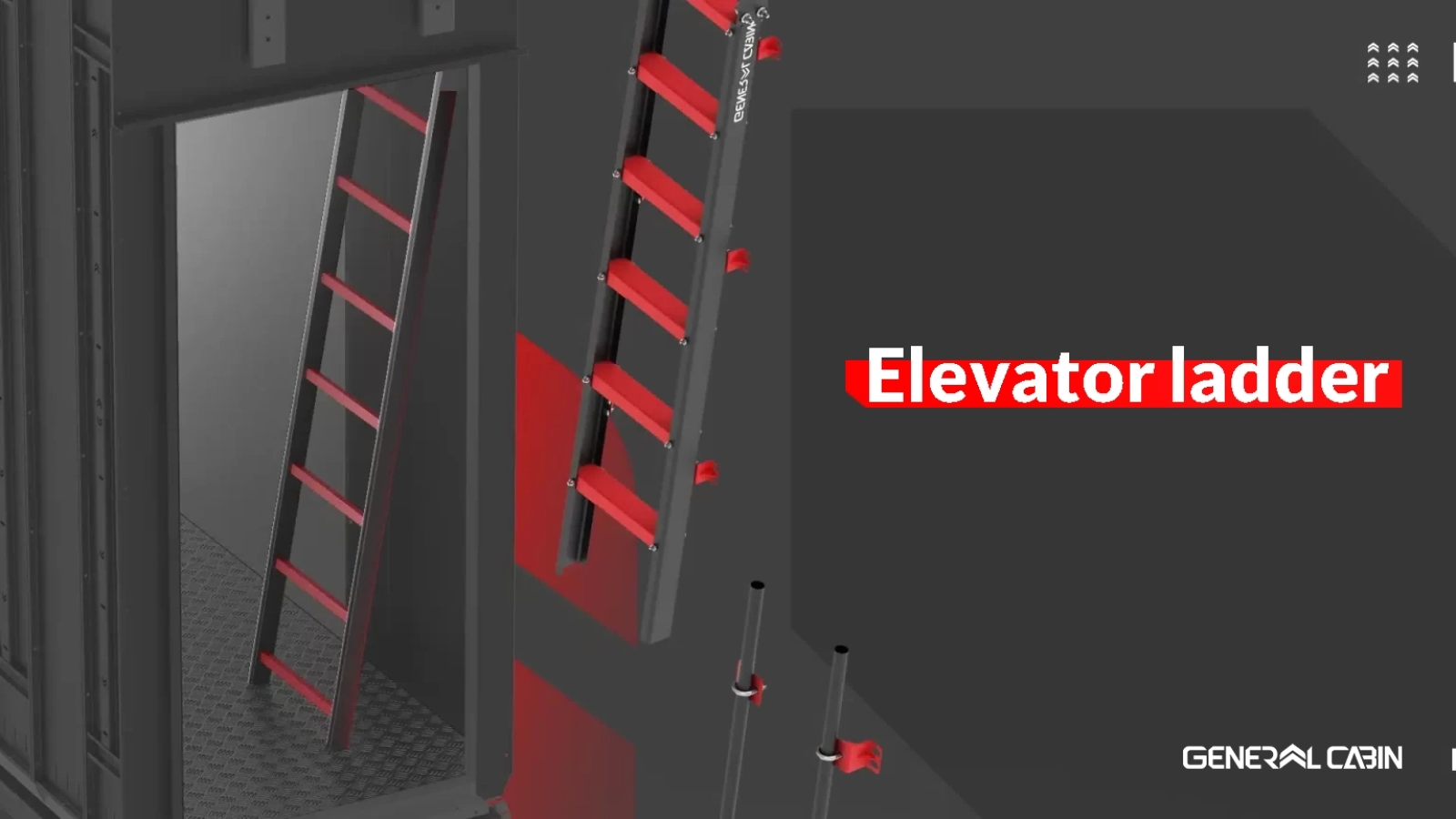
Generally, 3 types of ladders are used in elevators.

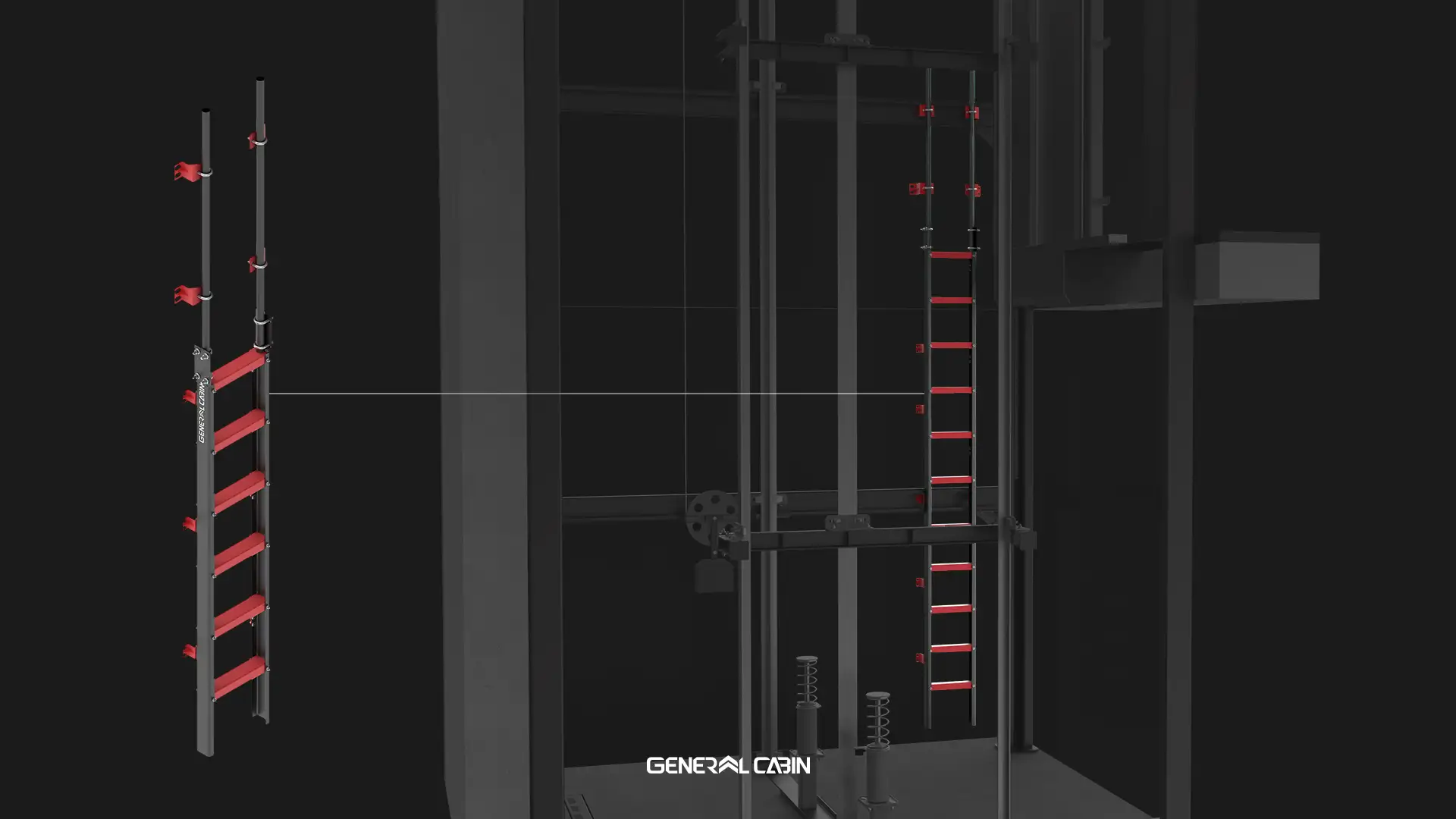
Elevator shaft ladder: If there is no access to the elevator shaft, a permanent device such as stairs or an elevator ladder must be installed at the bottom of the elevator shaft.

Elevator Cabin Ladder: In some cabins, such as firefighting and explosion-proof cabins, having a ladder on the cabin wall is essential. The installation location for these ladders inside the elevator cabin should be within a compartment covered by a door. The lock and door of the ladder should be easily accessible to any passenger of any height so that they can easily open the ladder door, exit, and use it.

Motor Room Elevator Ladder: Additionally, ladders are also used to access motor rooms that are located at heights and don’t have access through stairs or hatches, and they have specific standards.

At the General Cabin factory, ladders specifically for the elevator shaft and inside the elevator cabin are produced; however, access ladders to motor rooms are not provided.

نردبان آسانسور

Types of Elevator Shaft Ladders

Several different types of ladders are suitable for elevator shafts, all serving the same practical purpose but differing in their layout and design. Typically, there are 6 types of ladders used in elevator shafts, as shown in the image below.

Fire Safety Standards for Elevator Ladders

The fire department has introduced requirements and standards for elevators inside firefighting, fire-resistant, and explosion-proof cabins.

According to the fire safety standard, the presence of a ladder is mandatory, and it must reach up to one meter above the emergency hatch or the escape hatch of the elevator cabin. This is because, according to elevator standards, the height of the ladder should be proportionate to the useful height of the elevator cabin, and even a little shorter is acceptable.

The ladder installed inside the walls of the elevator cabin should have a door and a key so that a passenger can open the door with the key, provided by the rescuer, and use the elevator ladder to exit through the ceiling.

نردبان آسانسور

Firefighter Elevator

During a fire, it is necessary to have an available elevator for firefighters so they can efficiently carry out the evacuation of people from the building. This elevator must meet high standards and have a minimum 2-hour fire resistance. Additionally, it should be equipped with a key for control by the firefighters so that its activation is solely under the control of the firefighters from inside the cabin. It should not respond to other calls, to eliminate unnecessary stops and increase the efficiency of the elevator.

According to the building standards, buildings with a height of more than 23 meters must have at least one firefighter elevator, and buildings with a height of more than 40 meters must have at least 2 firefighter elevators.

نردبان آسانسور

Requirements for Installing Elevator Access Ladders for Safe Access to Machinery Spaces and Hoistways:

  1. The access ladder to the machinery room cannot exceed 4 meters.
  2. The ladder must be secured in such a way that it cannot be removed easily.
  3. Ladders with a height of more than 1.5 meters must have an inclination angle of approximately 65 to 75 degrees relative to the horizontal plane, and they must not allow slipping or turning.
  4. The usable width of the ladder must be at least 35 centimeters, and the depth of each step should not be less than 25 mm. In the case of a vertical ladder, there should be a minimum distance of 15 centimeters between the steps and the wall behind the ladder, and each step should withstand a load of 1500N.

In the vicinity of the highest steps of the ladder, at least one easily accessible handrail must be present.

The ladder must be approximately 1.5 meters away from the nearest access opening.

Ladder

Elevator Ladder Materials

In General Cabin, the ladders are made from a combination of galvanized steel sheets with thicknesses ranging from 2 to 10 millimeters and iron pipes. They are coated with electrostatically applied oven-baked colors that are completely rust- and scratch-resistant.

These ladders do not use welding, and all components are connected with screws and bolts for easy assembly, disassembly, or installation.

What do you think about this article?

Share your opinion with us

How Are Cabin Screws Selected ENG

Screws selection

2024 January 14

Read time : 9 m

Share:

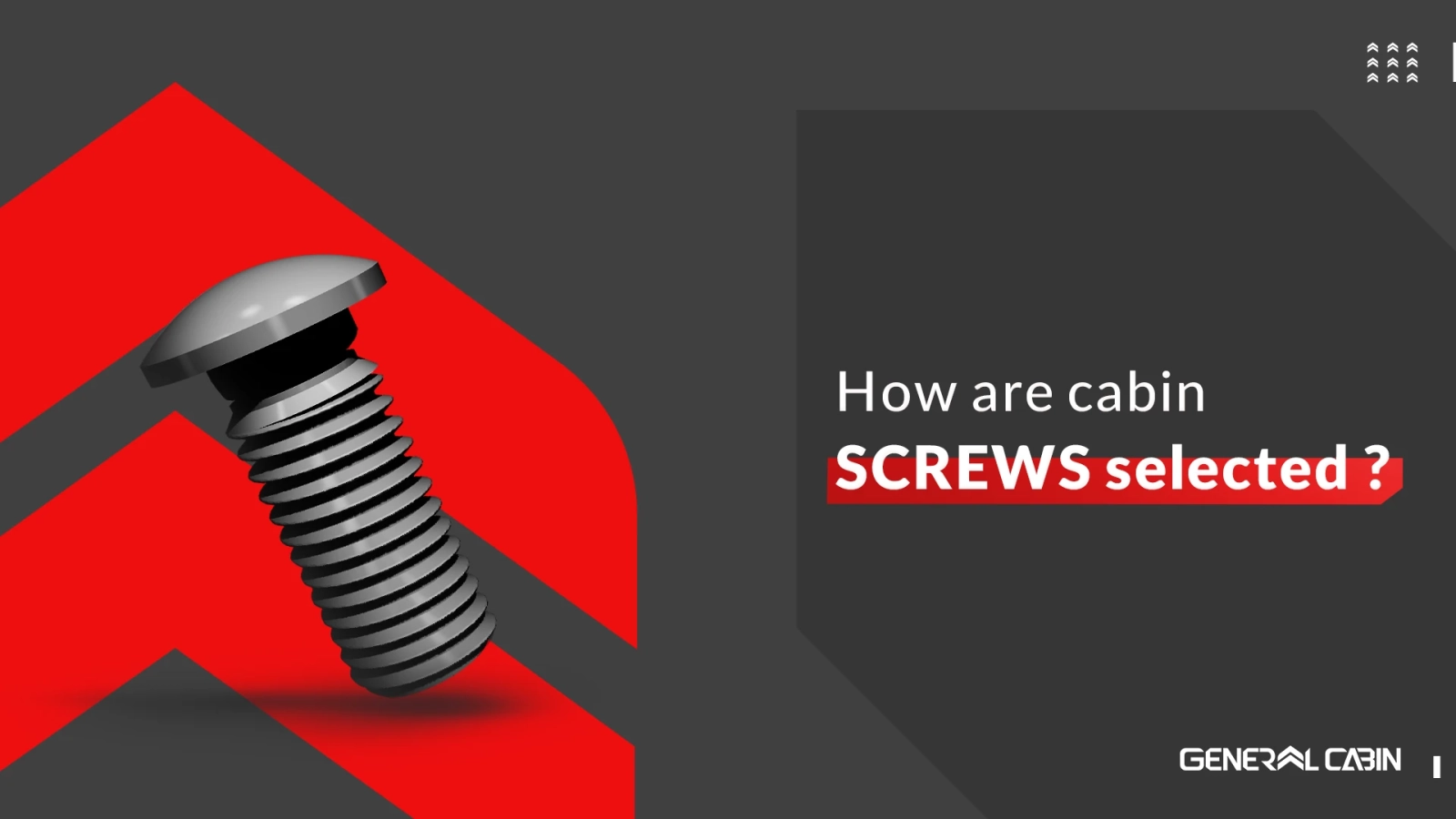
How are cabin screws selected?

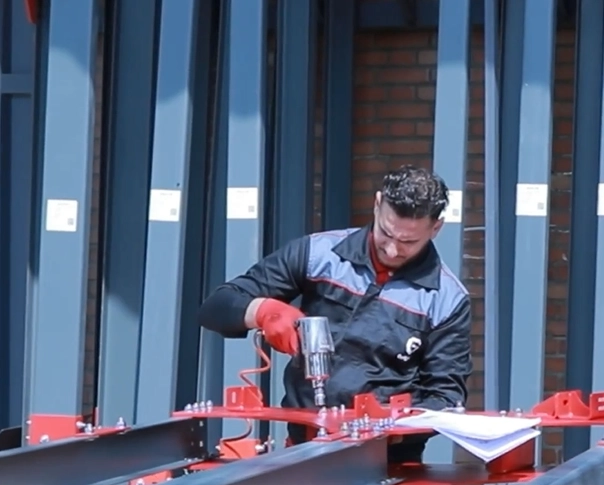
You might wonder what criteria and logic are behind the selection of the number and size of screws in creating sturdy and reliable connections between the yoke and the frame in General Cabin’s quality products.

In our approach, each screw is evaluated based on its grade, which indicates the level of strength and endurance it has against tensile and compression forces. We meticulously and accurately determine and design the connection pattern and necessary number of screws, considering the specific grade and the applied load.

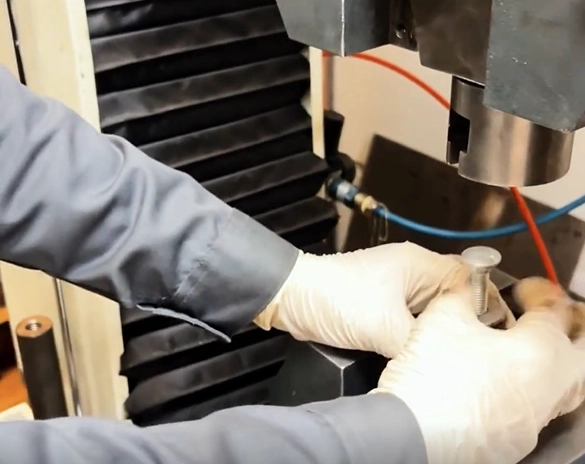
To ensure quality and standardization, we sent random samples of our produced screws to a reputable testing center to have the screws’ strength grades validated and determined with complete assurance.

چطور پیچ های کابین انتخاب می شوند؟

In the laboratory, screws with a diameter of 12 millimeters and a length of 5 centimeters were chosen for tensile testing and were mounted in a tensile testing machine. As the test began and the machine’s jaws moved apart, the screw was subjected to tensile stress, with the force increasing until it deformed and ultimately broke.

Throughout this process, the force applied to the screw was recorded in real-time and online in specialized software and displayed in a graph. These results assisted us in designing strong assembly structures at General Cabin Company.

Another important aspect was verifying the screw’s body’s ability to withstand the applied loads. Ensuring that the screw shank’s strength does not fail under extreme pressure is extremely important; fortunately, our produced screws have successfully passed this rigorous test.

What do you think about this article?

Share your opinion with us

What Is An Elevator Bracket

What is an elevator bracket?

What Is An Elevator Bracket

2024 January 13

Read time : 12 m

Share:

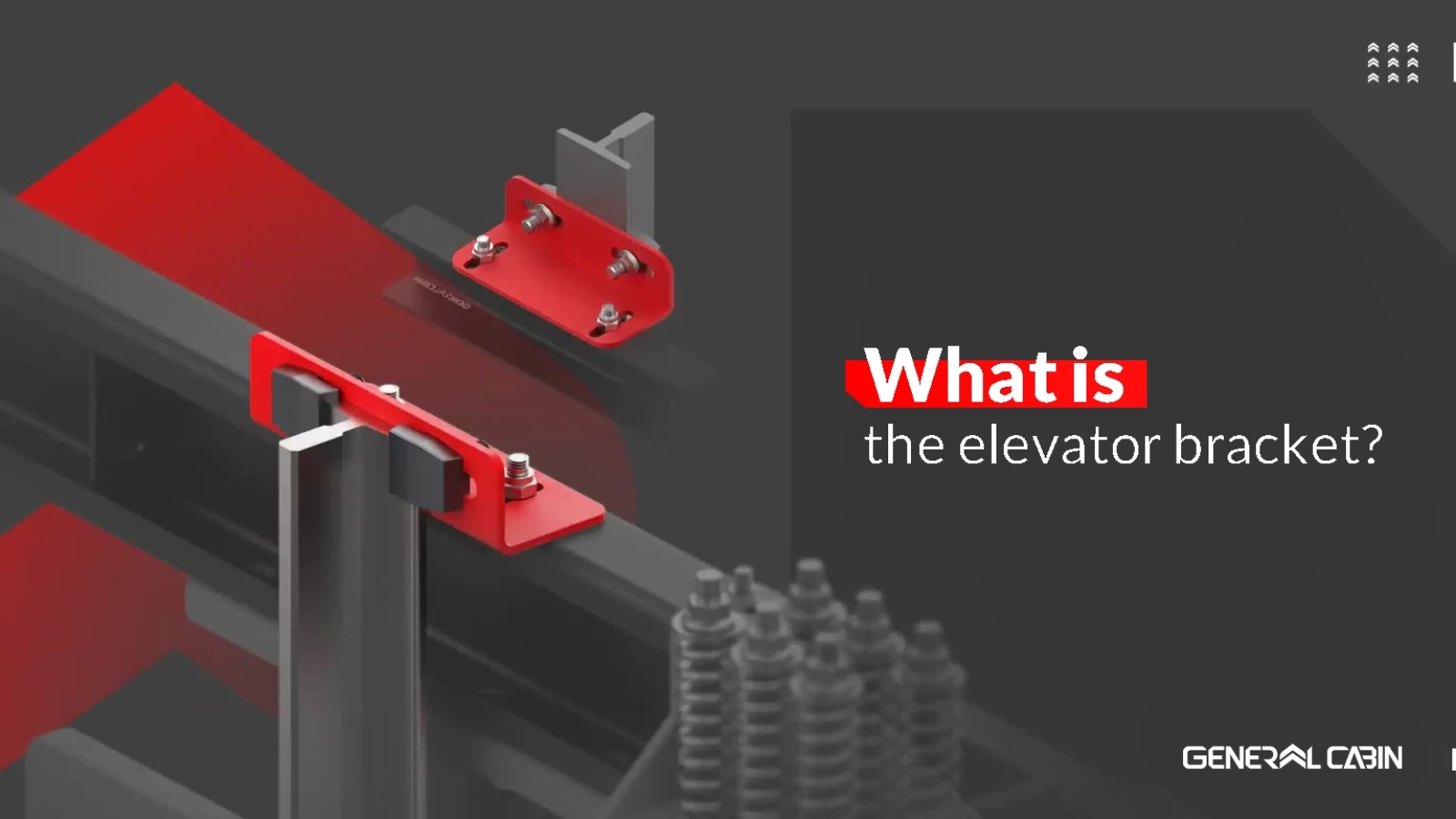
What is an elevator bracket?

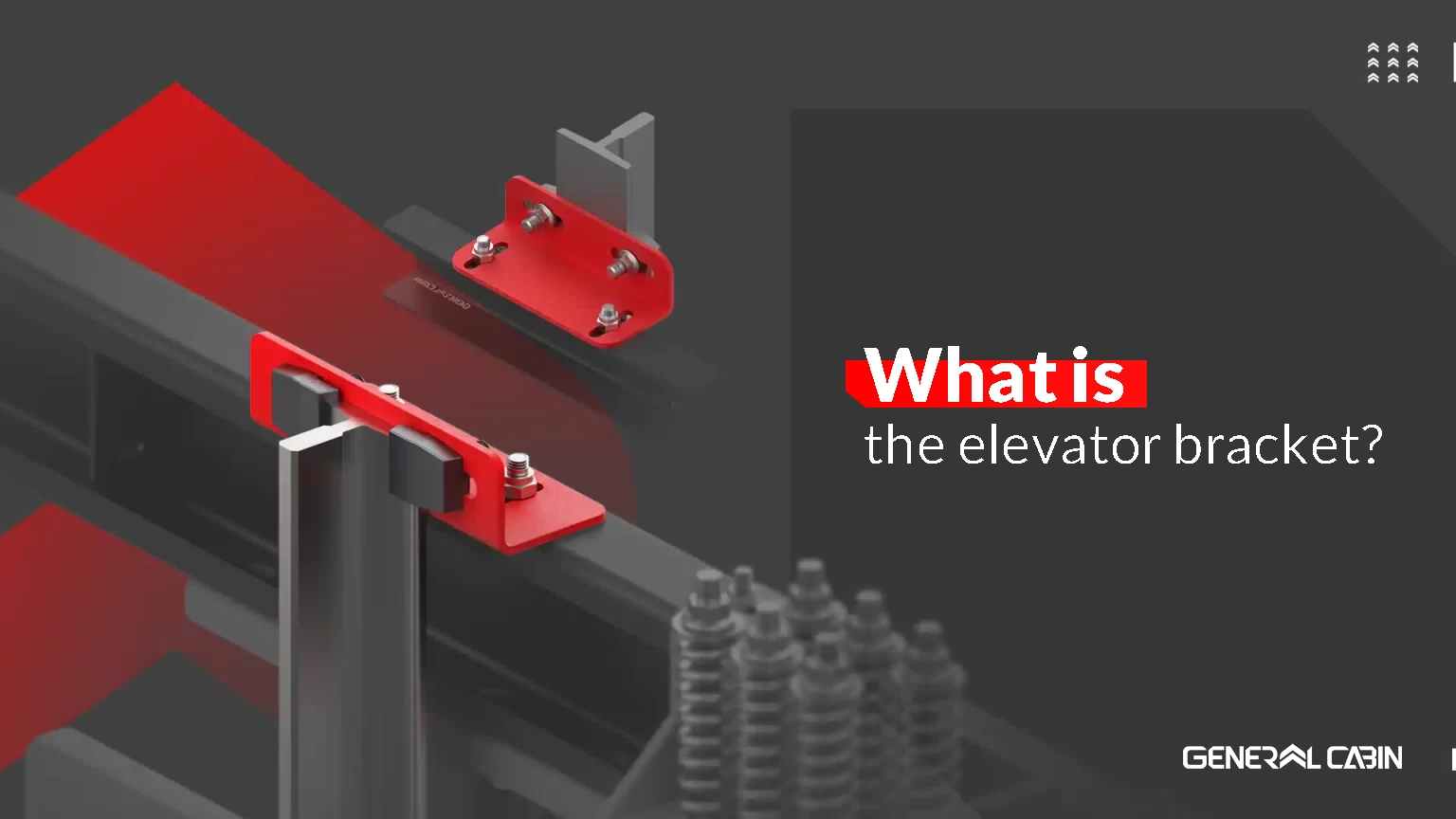
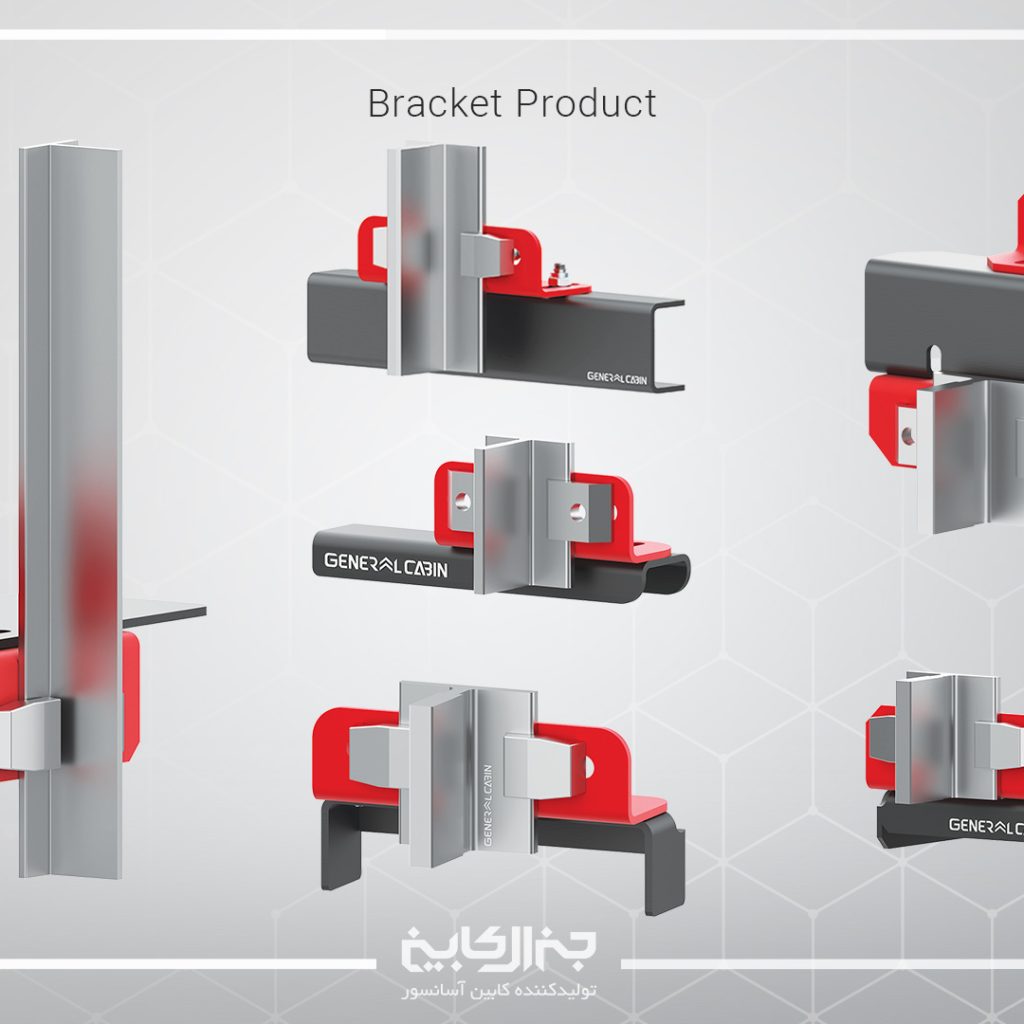
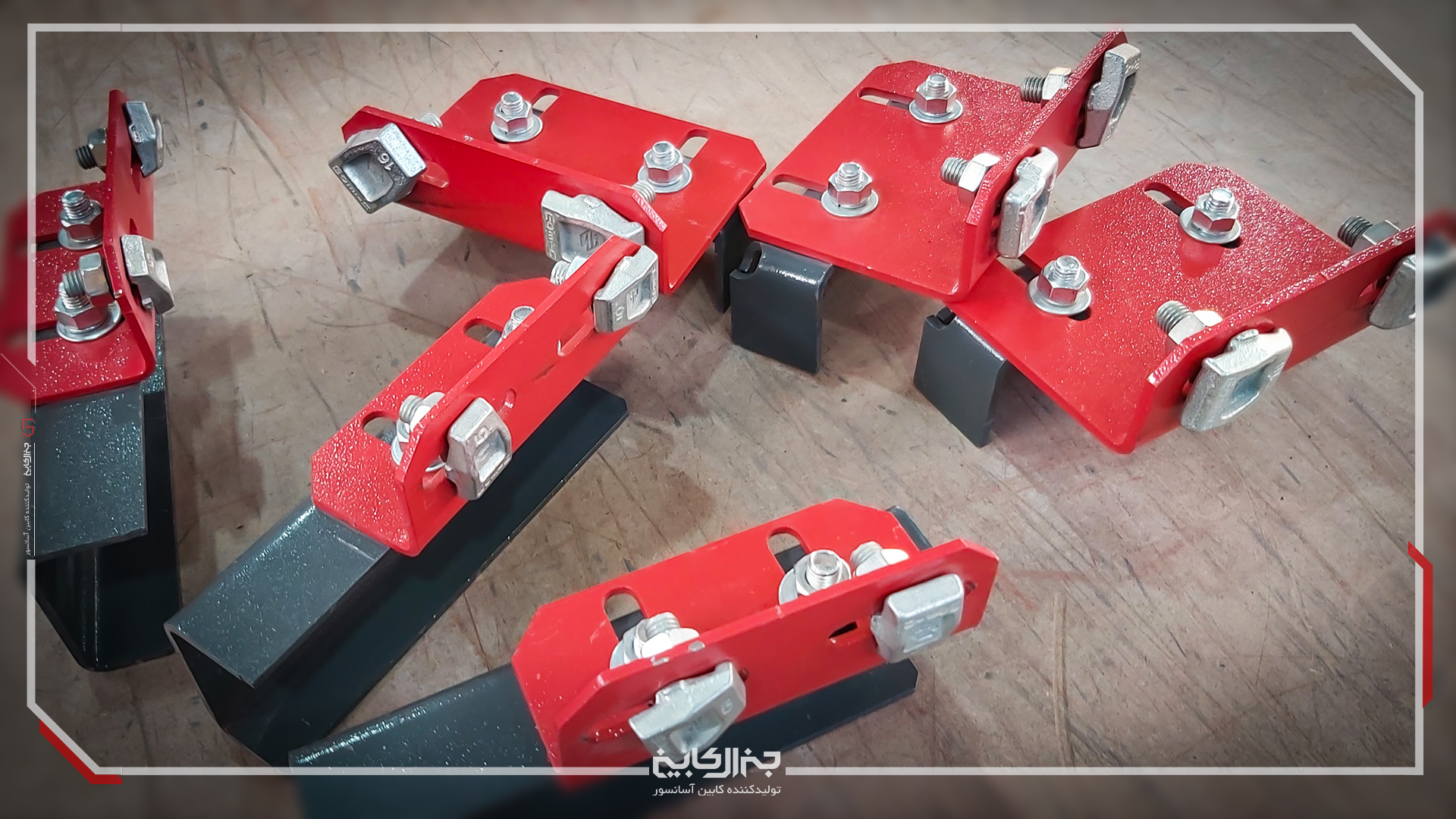
An elevator bracket is one of the essential parts that act as a restrainer for the guide rails of the cabin, serving as a connector between the elevator rails and the ironwork or structure within the elevator shaft.

Elevator rails are a crucial component of the elevator system that, if installed correctly, allow the elevator to move up and down smoothly and without any issues. Proper rail installation ensures no vibrations during the elevator’s operation, allowing the elevator to function at its best.

An elevator bracket acts as a corrector and adjuster for any deviations from the plumb that may occur in the elevator shaft. If the elevator bracket is functioning correctly and is properly positioned, the elevator can also move up and down correctly.

براکت آسانسور

The use of elevator brackets

We must say that brackets are bases where the elevator rails are mounted to the structure or the walls of the shaft, and they play a fundamental role in the correct installation and positioning of the elevator rails.

The size and type of elevator bracket are selected based on factors such as movement speed, size and type of rail, safety brakes, and elevator cabin capacity.

As mentioned in the beginning, the correct and proper installation of elevator rails depends on the quality and accurate execution of the brackets. This means that if the elevator brackets function properly even in their most minor aspects, you will have a high-quality elevator without issues.

However, the installation of this component must be done with precision and detailed craftsmanship to show adequate performance based on the expected function. The point of installation and connection of this component is to a structure, a brick or concrete wall, or a metal beam.

This part is constructed simultaneously with the building and might not exist in some buildings, which would then require installation after the necessary coordination.

In Iran, an ironwork method is used. With this method, the dimensions and types of beams and the distances between them need to be examined according to the building’s blueprint. Usually, in the ironwork method, brackets are connected to the building’s steel frame, which vastly influences the better installation of the elevator.

Bracket Construction Material

Usually, iron sheet corners and studs are used to make this piece, and this material can be used to make elevator brackets.

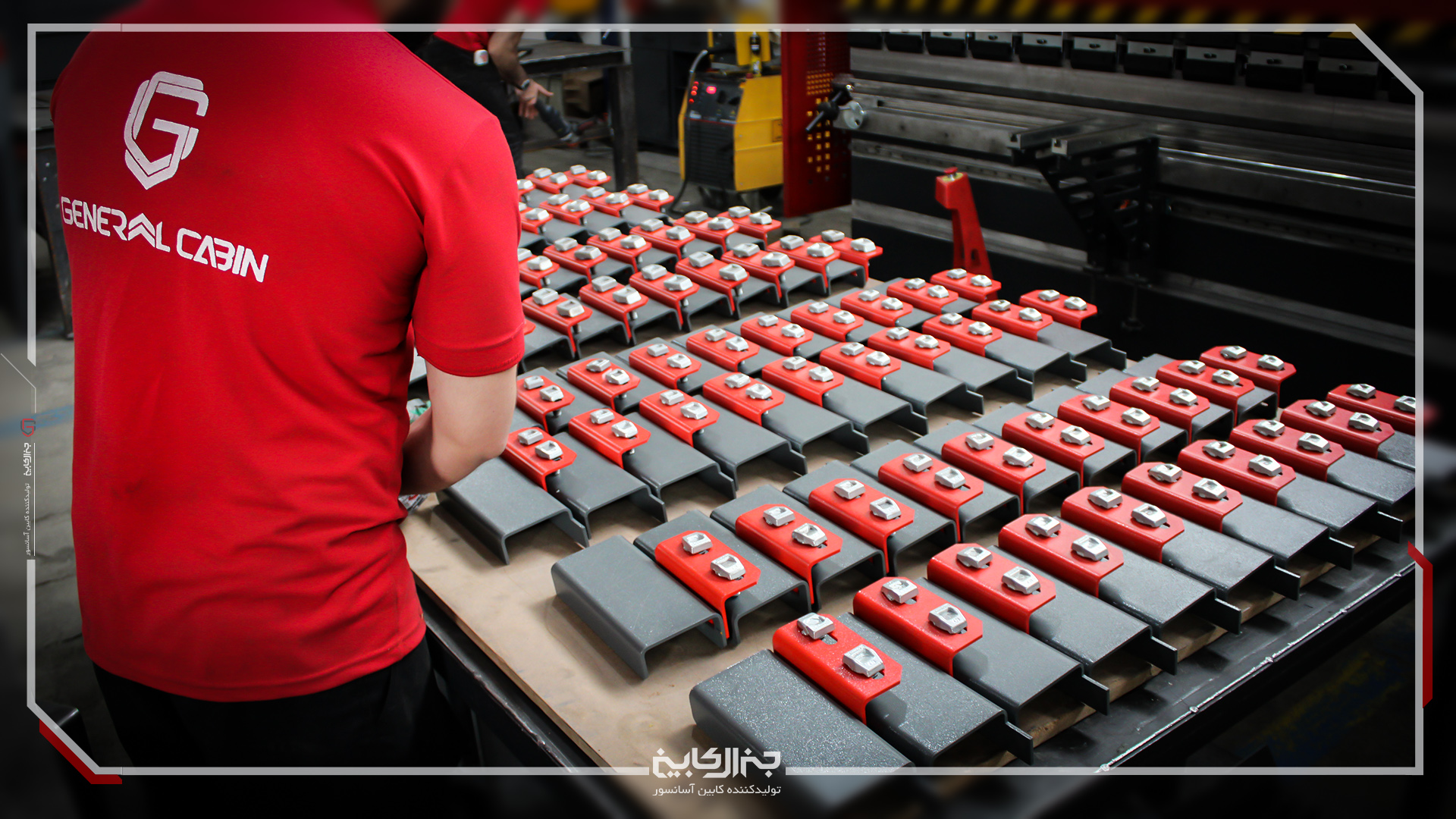
At General Cabin, the brackets are made from Mobarakeh steel sheets with thicknesses ranging from 8 to 20 millimeters, depending on the capacity and type of the elevator, and are coated with electrostatic oven paint, which is entirely rust and scratch-resistant.

براکت آسانسور

Elevator Bracket Installation Location

The elevator bracket is attached to structures or walls. The safer and more secure the installation site of this component, the better will be the quality and efficiency of the rails.

These two parts of the elevator (bracket and elevator rails) have a direct impact on each other, and the brackets must be correctly placed in the building for each rail. Proper distance from the doors on each floor and about the other brackets along the shaft is essential. This adjustment of distance and spacing is carried out by specialists and various elevator manufacturing companies and is a very precise and important task.

Base Brackets

At the bottom of the shaft, where the installation of the rails begins and is anchored, different types of base brackets or special base plates for rails are used. These brackets are attached to the bottom of the shaft using bolts and nuts.

براکت آسانسور

Elevator Clamp and Bracket

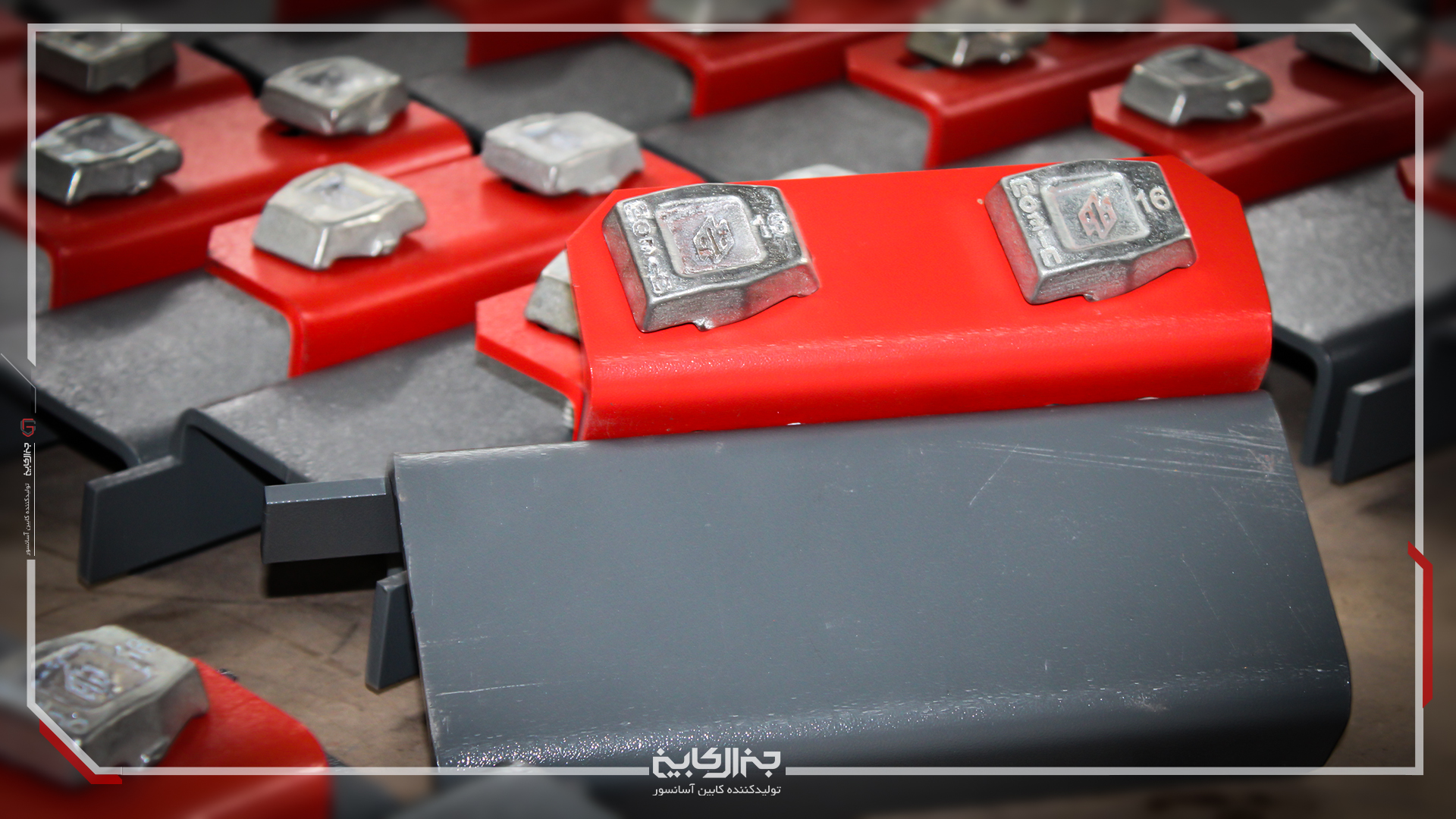
The clamp, also known as the elevator clip, is a part that is used in various sections of the elevator, including the bracket, and its function is to hold the retaining objects firmly and securely in place. For example, a bracket clamp is used to connect the rail to the bracket, and each bracket is connected to the rail with two rail clamps.

To calculate the number of clamps in an elevator, we first need to calculate the number of brackets. To do this, we multiply the number of rails used by three. Therefore, for each rail section, three brackets are used. Now, if we double the number of brackets, we get the number of clamps.

Clamps generally fall into two categories, cast and pressed, and they are cast iron or steel.

Functions of the Elevator Bracket

Now that you are familiar with this elevator component, we should say that elevator brackets are parts that are firmly attached to the structure. For this reason, this component cannot be adjusted at the installation site, and therefore, it needs to be handled with great precision before installation.

While the rails can be adjusted using filler sheets, adjusting the brackets after installation is not possible.

To install elevator brackets, angles or rolled metal sheets with slotted oblique holes are used.

The distance between the brackets in an elevator is at least 1.5 meters and at most 2.5 meters. These dimensions can vary according to the elevator rails.

براکت آسانسور

Bracket Price

At General Cabin, brackets are not sold separately and are provided with each project upon request.

For free consultation and price inquiries, please contact the sales department.

What do you think about this article?

Share your opinion with us

Cabin Floor ENG01

Features of General cabin products: cabin floor

2024 January 10

Read time : 10 m

Share:

Cabin floor

The elevator cabin floor is one of the most fundamental components of an elevator, which plays a crucial role not only in aesthetic appeal but also in safety and structural integrity. The cabin floor must be designed and built to withstand the weight of passengers and loads, remaining strong and resilient under heavy burdens.

The materials used in constructing the floor typically include metal, usually aluminum or steel, which may be covered with other materials such as tile, carpet, or plastic to provide additional beauty and sound insulation. Foam insulators on the cabin floor are used to prevent noise pollution from transmitting to other areas and also to increase passenger comfort.

The presence of reinforcements, like steel profiles with an omega-shaped cross-section or brackets that are welded to the floor sheet, is essential to enhance the floor’s resistance and strength against forces and impacts.

Furthermore, the cabin floor must be designed to be resistant to environmental factors such as humidity and temperature changes. In some cases, floors are designed to be foldable or removable to provide access to the underlying parts of the cabin for maintenance and repairs.

Overall, the elevator cabin floor should offer a combination of safety features, functionality, and aesthetic quality, and its durability and reliability should impact the overall quality of the elevator.

Features of General cabin products: cabin floor

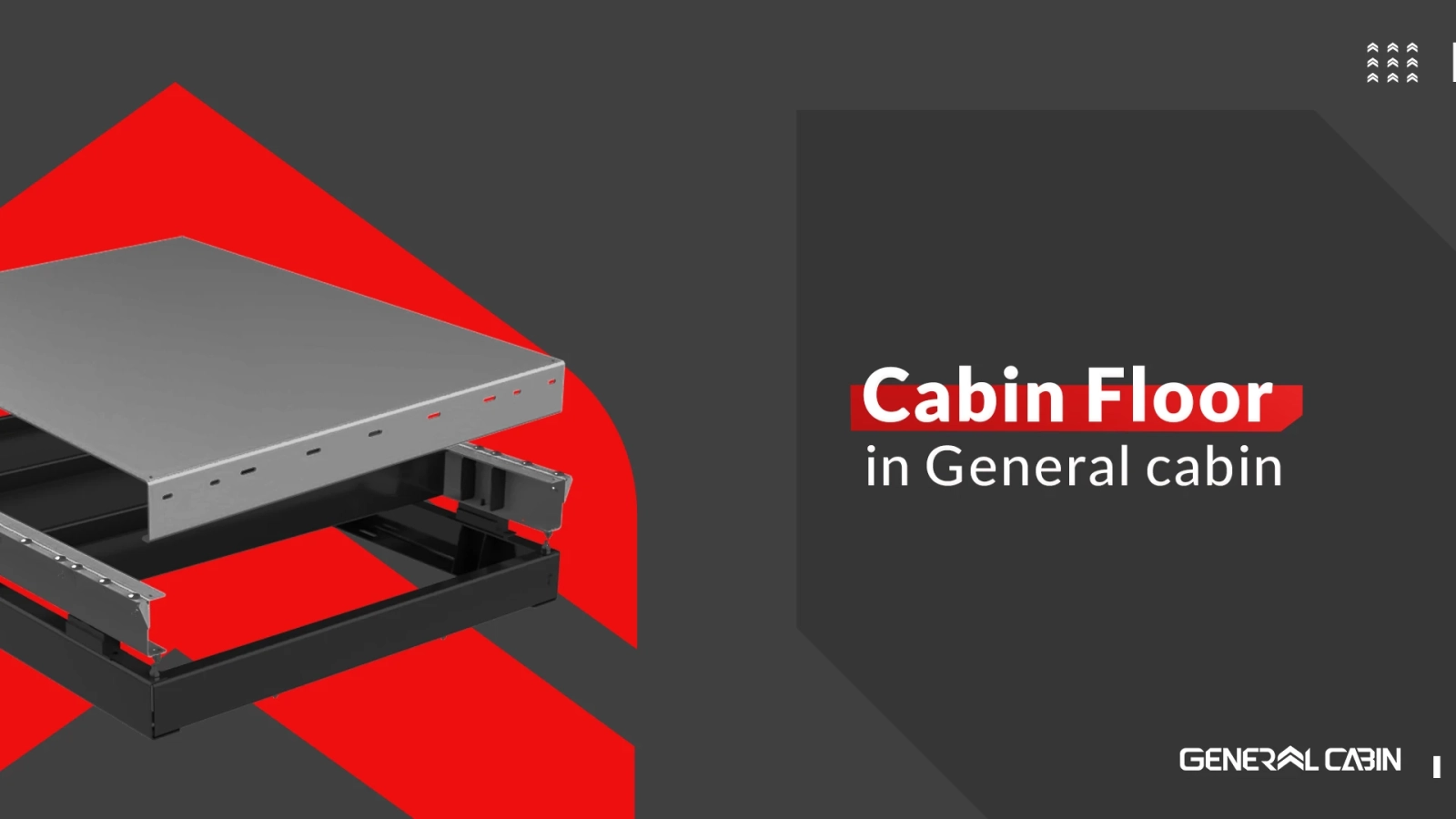
The floor sheet of the elevator cabin plays a critical role in the quality of movement and safety during a fall. These sheets are produced in General cabins according to capacity, with thicknesses of 2 and 3 millimeters, using ST-12 sheet metal.

One of the advantages of the General cabin is the presence of two bends on the side of the sheet, which increases the sheet’s strength. To enhance resistance against deformation due to the applied weight, several reinforcements with an omega-shaped cross-section are always welded to the floor sheet. We use two bent sheets shaped like channels on both sides of the floor sheet for extra reinforcement.

Ultimately, as a firm and cohesive structure is produced, it provides adequate resistance for this cabin assembly against impacts and collisions resulting from falls.

When the depth of the cabin is significant, the floor assembly is divided into two parts, which are connected with screws and bolts.

In areas where load cells (shock absorbers) are installed, two brackets are always welded to increase the strength of the welding, which prevents the floor sheet from buckling.

Lastly, it’s interesting to know that we use insulated foam to prevent the breakage of stones and the transmission of sound.

What do you think about this article?

Share your opinion with us

6 Person Capacity Elevator Cabin

6Person Capacity Elevator Cabin

6 Person Capacity Elevator Cabin

2023 October 10

Read time : 10 m

Share:

6-Person Capacity Elevator Cabin

The 6-person elevator cabin is one of the most common elevator cabins for residential buildings. This elevator cabin is also used for office buildings with relatively low density.

Suitable decorations for the 6-person elevator

Dimensions of the elevator cabin for 6 people

To construct an elevator cabin, we require precise information, one key element being the dimensions of the elevator shaft. Measuring the elevator shaft allows us to maximize the compatibility between the cabin and the shaft. Otherwise, the constructed elevator cabin might not be executable and could lead to numerous issues.

The necessary measurable components vary between different types of elevators, such as hydraulic and traction. Still, the main ones common across all elevators are the width, depth, and threshold of the elevator cabin door, which are used to calculate capacity.

The cabin width corresponds to the wall facing the cabin and the depth, to the side wall of the cabin. To determine the cabin’s capacity, we multiply the cabin’s width by its depth and add it to the area of the door threshold (threshold length by threshold depth).

The resulting figure is placed in a table of cabin dimensions and capacity to analyze the number of people the cabin can transport.

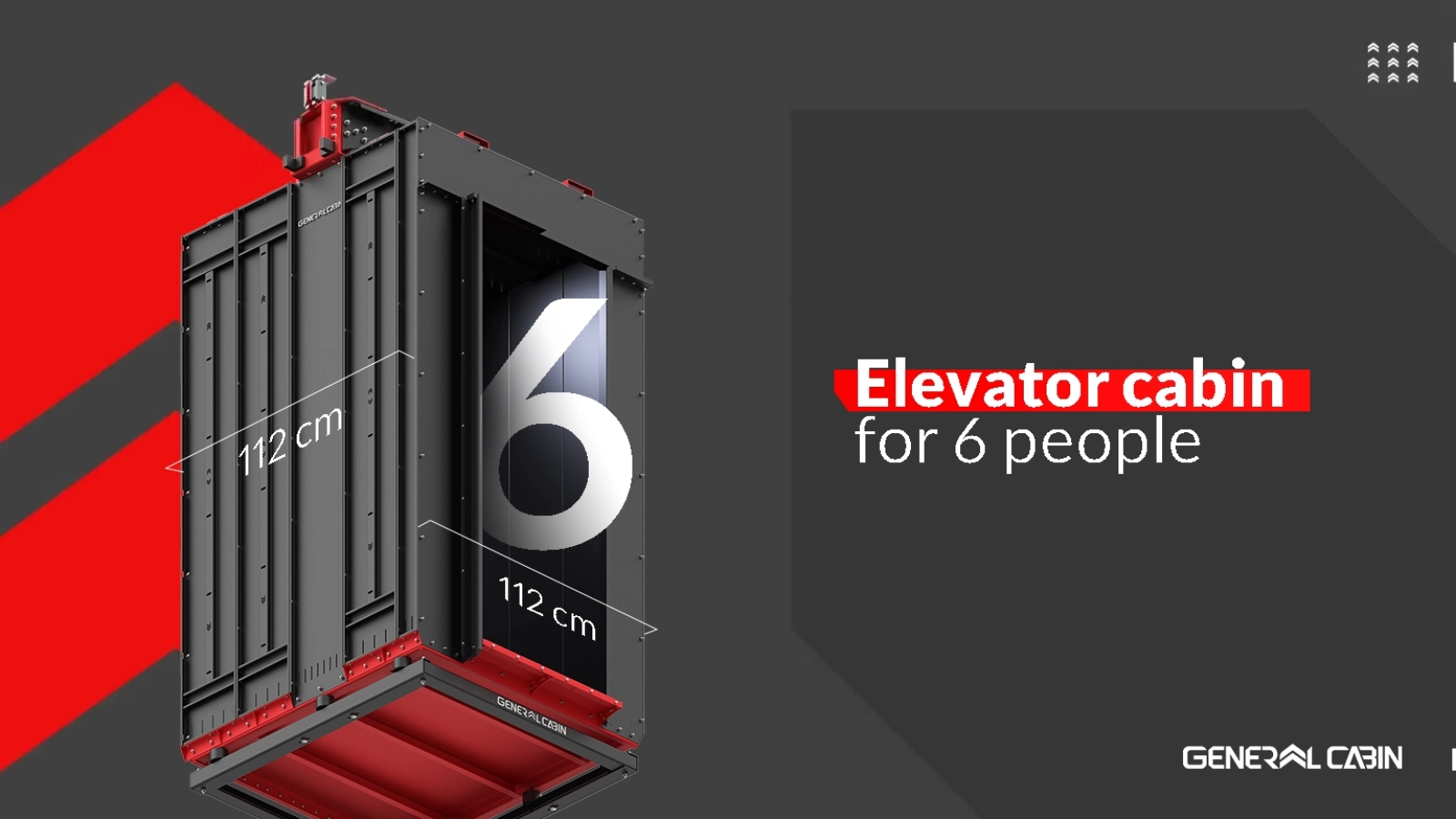
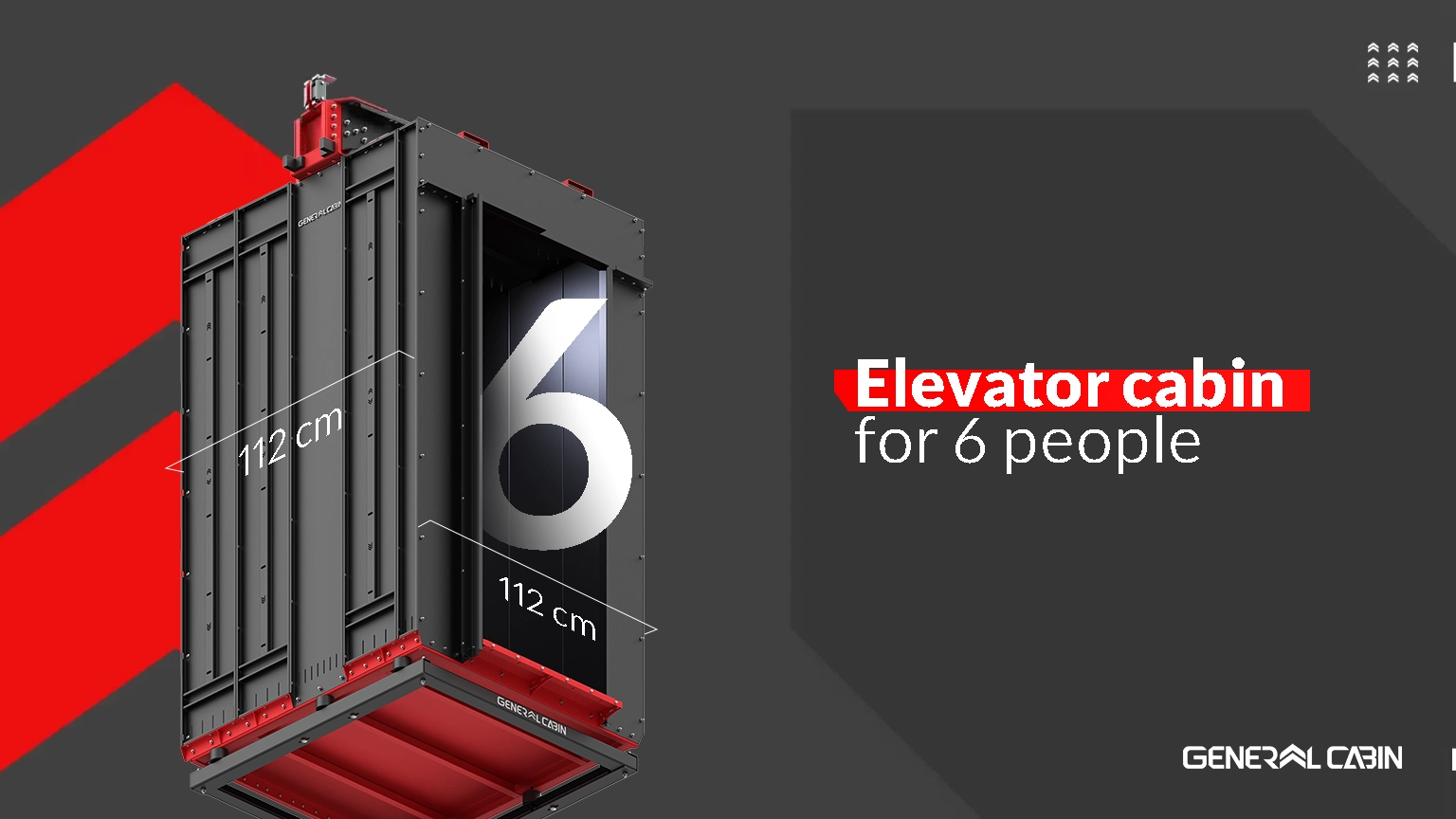
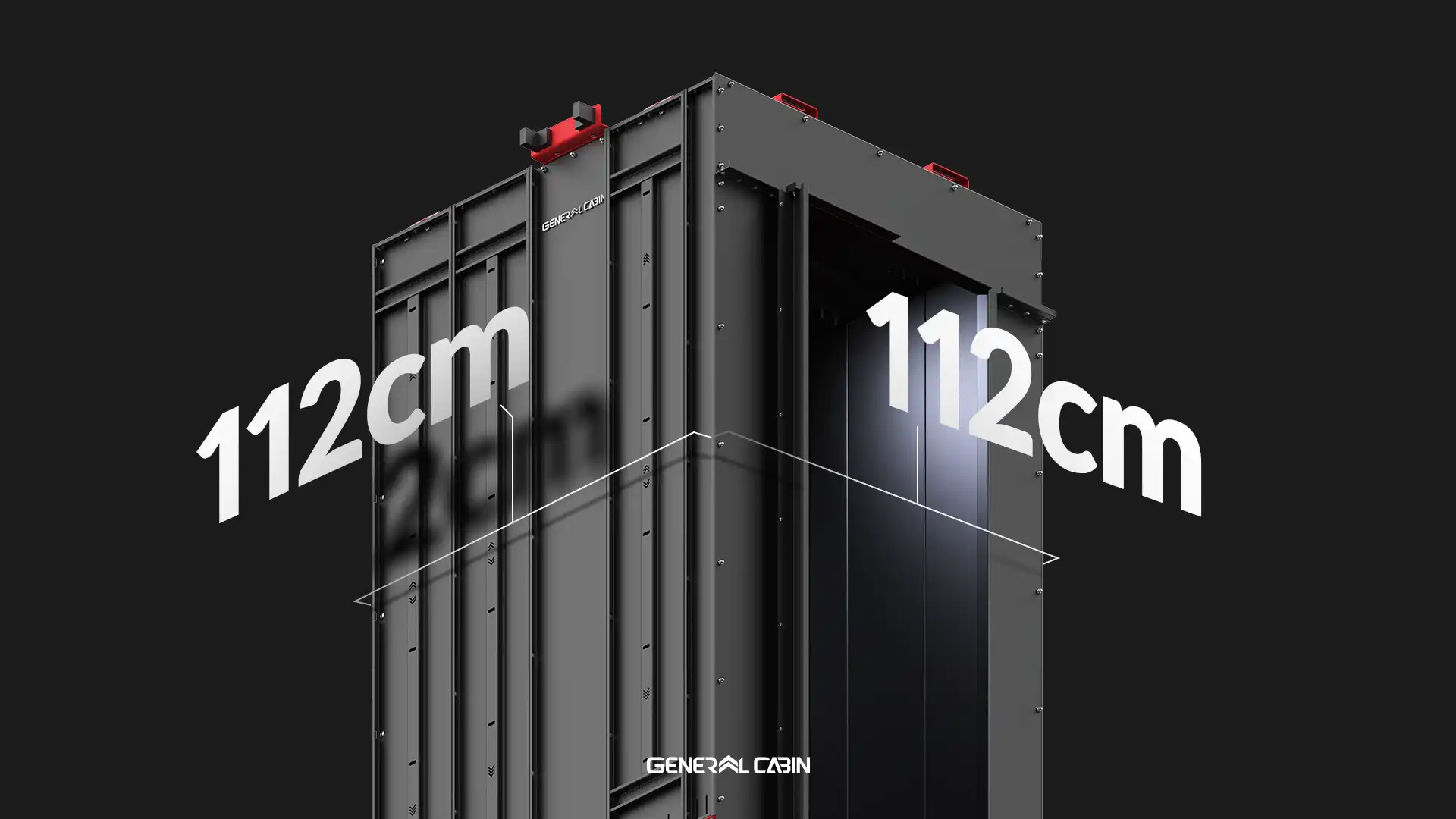
According to national building regulations, the dimensions of a six-person elevator cabin, which has a carrying capacity of 450 kilograms, range from 1.17 to 1.30, and the dimensions are 112 by 112 with a minimum height of 220 centimeters. These dimensions can proportionally vary.

If you lack the expertise to take measurements and perform calculations, General Cabin’s measurement and engineering team offers free shaft measurements and provides the drawings.

ابعاد کابین آسانسور 6 نفره

What type of motor for a six-person elevator?

The motor is one of the most important components of any elevator, being the driving force of the system, and selecting the most suitable motor is always paramount.

Factors to consider when choosing a motor include speed and capacity. In fact, before purchasing any type of elevator motor, you should check its usability and efficiency, then proceed.

Generally, elevator motors fall into categories such as gearless, geared, and magnetic, with gearless and geared motors being the most utilized in Iran.

The most prominent and high-quality geared motors include Sassi, Sicor, and Montanari motors, all of which are made in Italy and considered some of the best motors in the world.

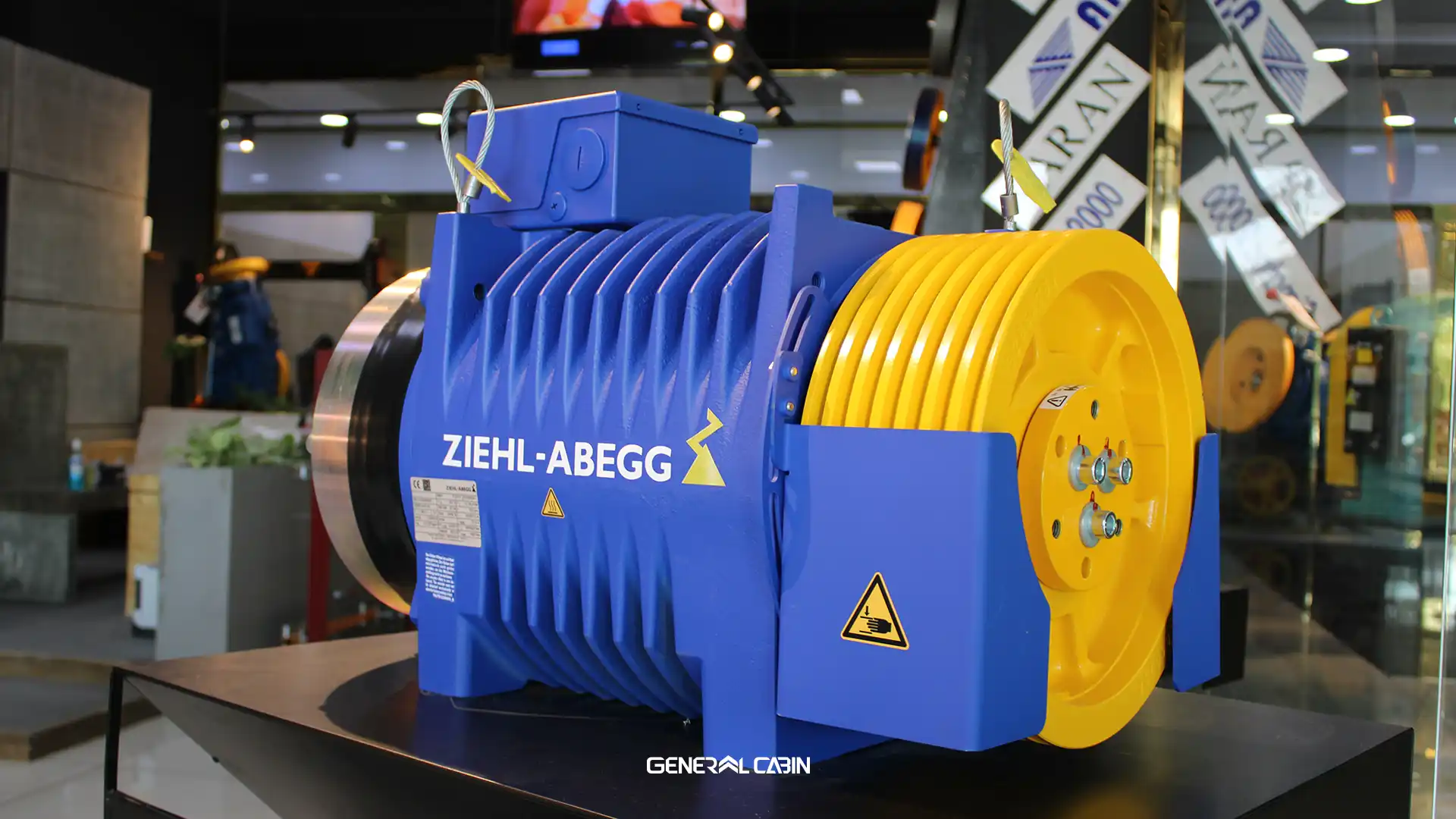
If your elevator uses a gearless system, our recommendation would be Ziehl-Abegg and Wittur motors from Germany.

موتور کابین آسانسور 6 نفره

What is the approximate weight of a six-person elevator?

The overall weight of an elevator cabin is derived from the sum of its components’ weight plus the weight of the maximum number of passengers it can carry.

Elevator cabin weight = Weight of the elevator cabin without decorations + Cabin decorations + Flooring stone + Counterweight of the cabin + Elevator door + Weight of passengers inside the cabin

The approximate weight of each person is about 75 kilograms, which for a six-person elevator cabin amounts to 450 kilograms.

The weight of the six-person elevator cabin without decorations is 220 kilograms, and with decorations, it reaches 510 kilograms.

The weight of the flooring stone depends on whether it is natural or artificial, with natural stones generally weighing more than artificial stones, about 75 kilograms.

The counterweight of the elevator cabin is approximately 260 kilograms, and the weight of the door is about 90 kilograms.

کابین آسانسور 6 نفره

Price of a six-person elevator cabin

One of the factors that influence the price of a six-person elevator cabin is the type of elevator, whether it is traction or hydraulic. Another factor is the capacity and height of the cabin, with increases in these aspects directly correlating with an increase in cabin price.

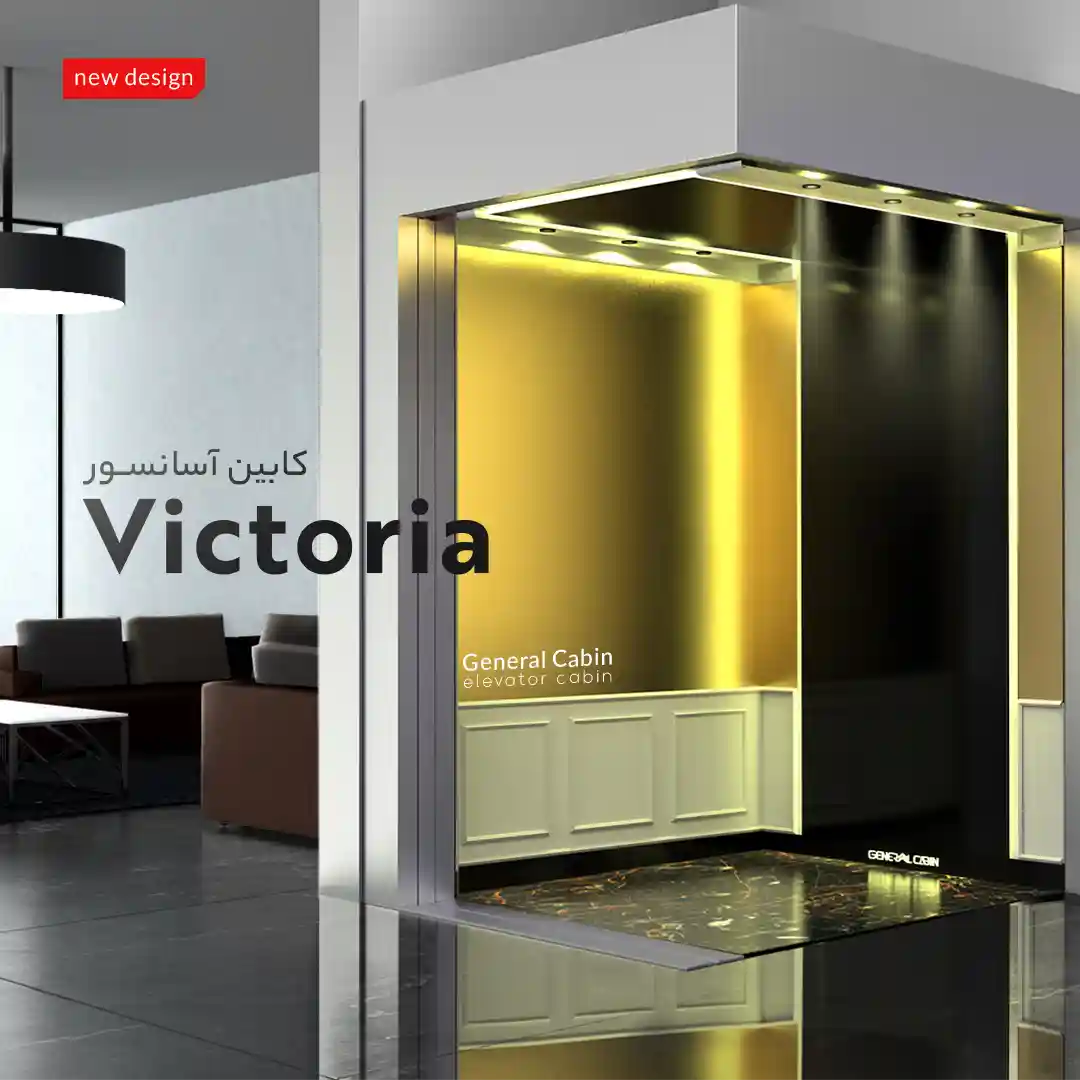
Decorations also affect the price. Some specific decorations that undergo different processes and use different materials can be more costly, for example, the Zaha elevator cabin which is produced using molds and primarily utilizes glass as the decorative material, or the Victoria elevator cabin which is designed with the use of MDF.


For more detailed information and precise price inquiries for your project, you can contact the sales team experts and receive free advice.

Suitable rails for a six-person elevator cabin

The metallic components with a T-shaped cross-section in elevator construction, used for guiding the cabin or counterweight, are the cabin rails or counterweight rails.

The rails have important functions such as guiding the counterweight and cabin in vertical motion, minimizing horizontal movement, resisting cabin fluctuations due to centrifugal forces, and stopping the cabin when the safety mechanism is activated.

The cabin and the counterweight frame are connected to the elevator rail via a shoe. These rails are automatically lubricated on both sides along the movement path. Clips and brackets securely attach the elevator rails to the elevator shaft’s structure.

Generally, for a six-person elevator cabin, T70-size cabin rails and T50-size counterweight rails are used. Due to the capacity not being very large and the cabin’s relative size not being particularly big, there is not necessarily a need for larger rails. However, some prefer to use T90-size cabin rails and T50-size counterweight rails.

کفشک کابین آسانسور

Cabin illumination

The lighting inside an elevator cabin is one of the most influential elements in terms of aesthetics and creating a positive feeling for the passenger. It is also very important for safety and preventing potential hazards.

When lighting inside an elevator cabin, attention must be paid to the ceiling height and its continuous movement. Appropriate methods and tools must be used to achieve proper illumination inside the elevator cabin, by its conditions and dimensions.

To supply light inside the cabin, LED, SMD, and halogen lights are commonly used, which vary depending on the type of decorations and interior design of each cabin. For example, LED lights are mostly used for linear lighting decorations, while halogen lights are used for point-source lighting.

In terms of standards, the permanent lighting within the cabin, which includes the illumination of push buttons and in front of the door, should be at least 50 lux. However, when the cabin is active, meaning passengers have entered and the cabin is in motion, the interior space of the elevator cabin should be fully lit, ranging from 150 to 200 lux, which also contributes to a better appearance of the elevator cabin.

6-Person Capacity Elevator Cabin

What do you think about this article?

Share your opinion with us

Double-walled cabins

Double-walled cabins

Double-walled cabins

2024 January 9

Read time : 10 m

Share:

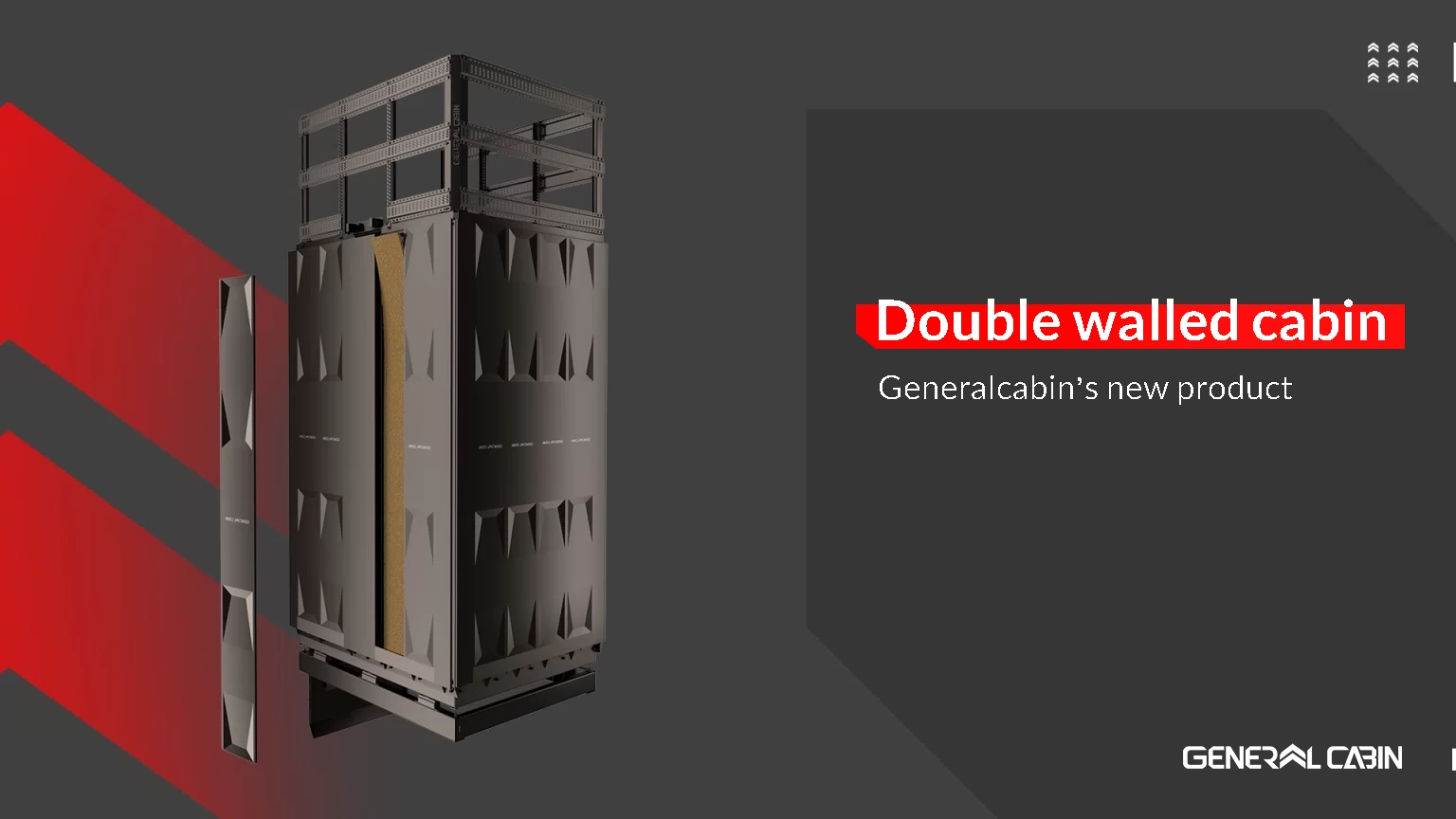
The standards for double-walled elevator cabins pertain to the technical specifications and safety standards for the design and construction of elevator cabins, which have been developed for sound insulation, heat retention, and increased fire safety. These standards discuss factors such as the thickness of the sheets used, the filler materials between the double walls, and the details of how the parts are connected.

کابین دو جداره جنرال کابین

Double-walled cabins

A double-walled cabin has two advantages: sound insulation and heat insulation.

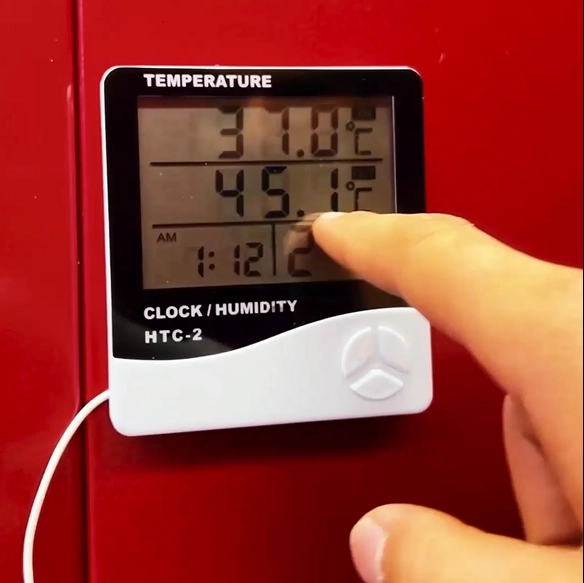
Double-walled cabins, with their two notable benefits, appear very effective: insulation properties against sound and heat. Heat insulation means that in potential events such as fires or thermal explosions in the elevator shaft, passengers can remain safe within a General brand double-walled cabin for one to two hours. However, the protection level depends on the fire’s intensity and temperature. Suppose the temperature outside the cabin is around 300 degrees Celsius. In that case, the temperature of the metal surface inside the cabin will be about 40 degrees, on which MDF steel is applied as the final layer. Ultimately, the internal temperature of the cabin under normal conditions will be about 35 degrees; in this case, the individuals inside the cabin can remain safe for approximately two hours in the worst thermal conditions, like a fire. The reverse is also true. The air inside the cabin is cooled by air conditioning and this cool air doesn’t escape outside due to the cabin’s double-walled design.

Sound insulation is another excellent advantage of the double-walled cabin. We are all aware of the noise and commotion associated with the elevator shaft and motor operation, which usually causes discomfort and stress among the users, especially when the elevator speed exceeds 1.6 meters per second. Under these circumstances, a double-walled cabin acts like a sound barrier, preventing undesirable sounds from entering the cabin, and thereby providing a quiet and noise-free experience for the riders.

What do you think about this article?

Share your opinion with us